R.W. Holmes Commercial Real Estate of Wayland, Massachusetts, celebrated its 50th anniversary in February. Founded by Robert Holmes, the company helped pioneer brokerage along Route 128 and throughout MetroWest in Greater Boston as those corridors began taking shape in the 1970s. Today, Garry Holmes and his daughter Elizabeth Holmes are guiding the 20-person firm through a measured transition to its third generation.
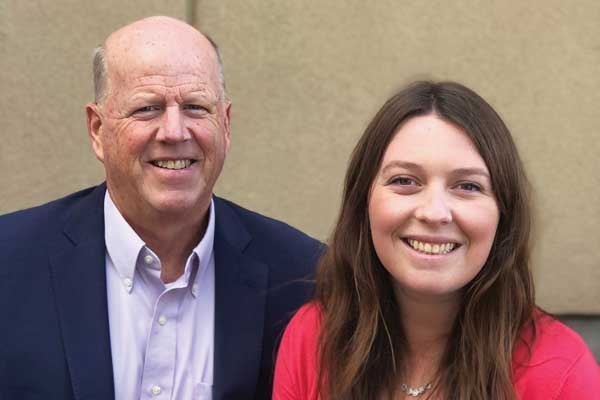
Garry Holmes and Elizabeth Holmes
There is no fixed retirement date in place; instead, Elizabeth, director of corporate services, is steadily taking on greater responsibility while Garry remains the firm’s president, maintaining long-standing client relationships and industry ties. Together, they are modernizing where needed while preserving the hyperlocal expertise that built the company’s reputation.
Development: R.W. Holmes was founded in 1976, just as suburban business corridors were beginning to emerge. What did Robert Holmes see in those markets that others missed at the time?
Garry Holmes: I don’t know that my father saw something others completely missed. I think it was more being in the right place at the right time. Back then, the entire real estate community — developers and brokers — were focused on Boston and Cambridge. That’s where the action was. Then developers began taking risks and moving out toward what was the Route 128 belt. My father focused there.
He had worked at Nordblom Company, a major developer and brokerage firm in Boston. As he spent more time in the suburbs, he saw development accelerating. It wasn’t dramatic at first, but it was consistent. He saw the trend early enough to commit to it. So, yes, he had foresight. But timing matters in this business, and he happened to be paying attention when others were still looking downtown.
Development: Suburban commercial real estate was not yet an established specialty in the 1970s. How did being early shape the firm’s culture and approach to the market?
Elizabeth Holmes: Reputation matters. Being around for 50 years matters. But more importantly, we are deeply committed to local expertise and attention to detail. Some of the larger firms have started to commoditize brokerage services. We are committed to being true advisers. Our brokers get involved in their submarkets by joining boards and committees, and many live in the communities where they work. They are expected to be local resources who know the buildings in their markets, the landlords in their markets, and make connections due to their local networks. Clients recognize that level of nuance. And that is what differentiates us.
Development: Has there ever been serious pressure, internally or externally, to sell, merge or affiliate the company? How did you evaluate those moments?
Garry Holmes: We’ve had the privilege of working with venture-backed companies from our inception, particularly in medical device and cybersecurity. We’ve helped them scale. Everything goes well until you open the business section of The Boston Globe and see that your client has been acquired by a large national or international company. When that happens, we often lose the ability to continue servicing them.
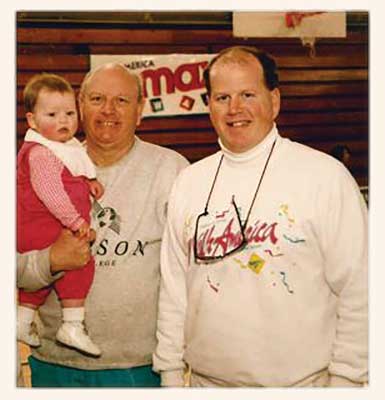
Robert Holmes, holding granddaughter Elizabeth and standing next to son Garry, founded R.W. Holmes Commercial Real Estate in 1976.
We had three of those acquisitions happen within a few months before the COVID-19 pandemic, and each prompted serious discussions about affiliation. But when we brought it to our team, there was strong pushback. Our employees are here because they prefer to work for a midsized regional firm. They value independence. They value identity. We evaluated it seriously, but we remain independent and are committed to it.
Development: Family succession is notoriously difficult in professional services firms like yours. What did you get right — and what was harder than expected — as leadership transitioned from first to second generation and now from second to third?
Garry Holmes: My father passed away unexpectedly at age 57. I was 31 at the time. You don’t prepare for that. One day I am working alongside him as senior vice president, the next day I am responsible for everything. I had mentors who encouraged me not to bring in an outside president but to step up myself. They believed I could do it.
And now, in transitioning from the second generation to the third generation, I’ve had to stop saying, “That won’t work.” I’d sit in strategic meetings and say, “We tried that before.” Eventually, I realized that experience can become a brake on progress. So I stepped back from those meetings and let the team explore new — or old — ideas. Ideas or strategies that didn’t work 10 years ago might work today because the market has changed. That was an adjustment for me.
Development: Elizabeth, what was your title coming into the company?
Elizabeth Holmes: When I was hired from Ernst & Young, we created the director of corporate services title, and I have had it ever since. It doesn’t display all the internal work I do, but it is a helpful title for our larger corporate clients so they know we can service them.
Development: As you step into a leadership role, how do you balance honoring what was built before with the need to perhaps modernize other areas of the firm?
Elizabeth Holmes: We’re careful about that. We follow a strategic plan. If something doesn’t work, we adjust the approach, not the objective. Hiring is a good example. Just because one hire doesn’t work doesn’t mean you abandon investing in talent. Being a boutique firm helps. We can identify issues quickly. We can pivot without bureaucratic delay.
Development: How do you divide your responsibilities today in a way that avoids overlap, tension or mixed signals inside the firm?
Elizabeth Holmes: We’re both in the office every day. If something falls into a gray area, we talk immediately. I’m handling more of the day-to-day operations. Employees increasingly come to me first. If it requires collaboration, we sit down and work through it.
Garry Holmes: We have two sides to the business: brokerage and ownership. We own a modest portfolio of office, lab and warehouse buildings. For now, Elizabeth’s primary focus is brokerage, while I focus on ownership.
Development: Over the past decade, how has the Greater Boston suburban market fundamentally changed, from tenant expectations to deal structures?
Garry Holmes: Dramatically. When I started, ownership was primarily local and entrepreneurial. Now it’s institutional. Institutional ownership changes everything. Lease terms are longer. Credit standards are tighter. Security deposits are larger. Tenant improvements are more costly. The days of sitting across from a local owner are largely gone.
Development: What investments — technology, data, talent, services — were essential to staying competitive as the market evolved?
Elizabeth Holmes: You can spend endlessly on technology in this industry. But technology alone doesn’t differentiate you. Talent does. Our brokers know their submarkets intimately. They know who owns each building. They know which buildings are quietly available. They know which landlords will negotiate aggressively and which won’t.
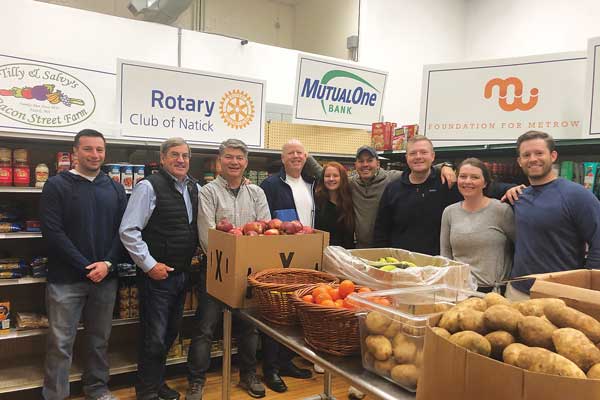
As a third-generation family business, R.W. Holmes Commercial Real Estate also strives to treat employees like family "because that culture sustains the firm," says Elizabeth Holmes.
The joke internally is that even the spouses of our team members know the buildings. My husband, for example, can now name most of the buildings along Route 128 because he hears about them at dinner. That’s the level of immersion at which we operate.
Development: You publish regular market reports and maintain deep local intelligence. How important is hyperlocal knowledge in an era of national data platforms?
Elizabeth Holmes: We launched a hyperlocal quarterly report because we felt the national firms were grouping too broadly. Each submarket has its own personality. Highlighting that reinforces our credibility. The response has exceeded our expectations.
Development: Only about 1 in 8 family businesses survives into the third generation, according to family business research. As you look at R.W. Holmes celebrating its 50th year, what lessons have you learned about leadership continuity? And what has surprised you most along the way?
Garry Holmes: Employees want you to succeed. Don’t hide challenges from them. If you share concerns, people step up. I’ve been surprised by how willing employees are to help solve problems when you’re transparent. Too many leaders try to conceal issues.
Elizabeth Holmes: Longevity has been an intentional choice for us. Because independence and continuity matter to us, we evaluate decisions in 10- and 20-year increments, not quarterly cycles. We also treat employees like family because that culture sustains the firm. Alignment around long-term goals makes continuity possible.
Development: When mistakes happen or deals don’t go as planned, how do you handle accountability internally?
Garry Holmes: We ask two questions: Did we act ethically, and did we give full effort? If the answer isn’t yes to both, we have work to do.
Elizabeth Holmes: With the average tenure of our employees being 24 or 25 years, trust is built in. When something doesn’t go as planned, we analyze it. We learn from it. We improve. That continuous refinement has been part of our success.
Development: What does success look like for the firm 10 years from now?
Elizabeth Holmes: Stability. Reputation. Continued relevance. I’m fortunate to inherit a firm with strong fundamentals. My responsibility is to preserve the foundation while modernizing intelligently.
If in 10 years we’re still known for deep market expertise, sophisticated transactions, and treating clients and employees with care, that’s success. We don’t need to become something entirely different. We need to continue doing what we do well — at a high level. That’s how you last in this business.
Ron Derven is a contributing editor to Development magazine.The Entrepreneur interviews are edited for length and clarity.