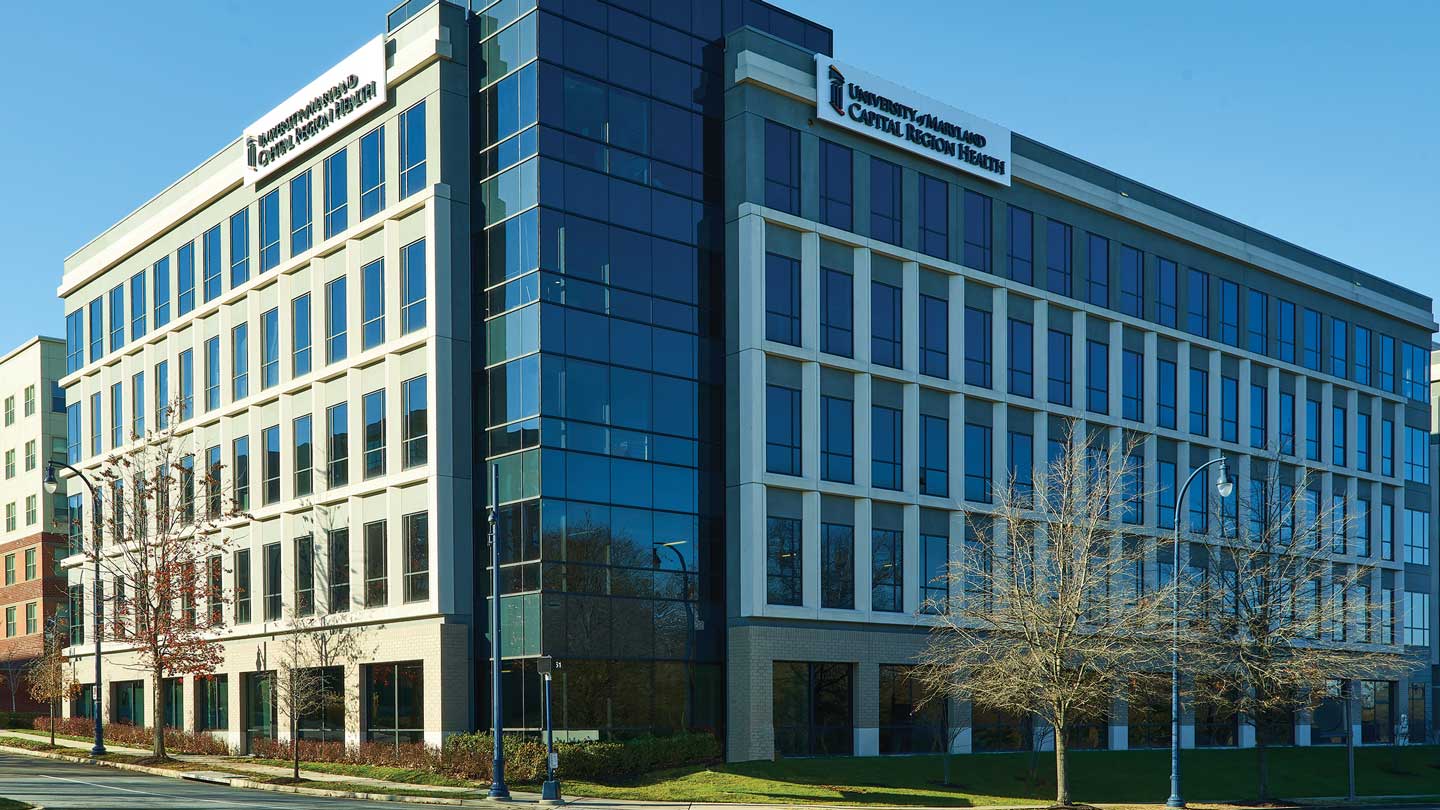
Class A medical assets are emerging as stabilizing anchors within mixed-use districts.
For more than a decade, the live-work-play model has defined mixed-use strategy across the United States under the rationale that residential density fuels retail and office supports daytime activation, while hospitality, dining and entertainment extend evening traffic. It is a synergistic system that supports energizing a space or a corridor throughout all hours of the day.
More recently, a fourth pillar has emerged — health care — that is reshaping how these environments are underwritten, designed and stabilized. The live-work-play model is now becoming live-work-play-health, and it is rapidly increasing in popularity. This shift is being reinforced by accelerating outpatient demand, with outpatient visits increasing 7.2% year over year in late 2025 and outpacing inpatient growth, according to Strata Decision Technology.
Medical office buildings (MOBs), once treated as single-use suburban assets adjacent to hospital campuses, are now being integrated directly into walkable districts. The shift reflects structural changes in outpatient delivery, capital markets resilience and regulatory economics that are materially altering development strategies for upcoming projects.
Nationally, Class A MOB cap rates have remained comparatively resilient relative to traditional office, reflecting stable tenancy, long lease terms and demographic demand. In the first quarter of the year, cap rates for institutional-quality, on- or off-campus Class A MOB assets generally ranged in the mid-5% to low-6% band depending on geography and tenant credit, with compression in top-tier markets, according to a Capital Real Estate Group market analysis. While spreads fluctuate by region, investor appetite for well-located, purpose-built medical remains durable.
At the same time, hospital systems are decentralizing. Outpatient consultations, diagnostics and ambulatory procedures increasingly occur closer to where patients live rather than at centralized hospital campuses. This migration has direct implications for mixed-use planning.
Medical Pavilion I and II at National Harbor in Prince George’s County, Maryland, just outside of Washington, D.C., offers a case example of how this convergence can be executed at scale, embedding purpose-built medical within a dense, lifestyle-oriented district while aligning with broader outpatient and regulatory trends.
Hospitals Are Moving to the Patient
Historically, patients traveled to the hospital campus for most services. Today, the front door to care is increasingly local.
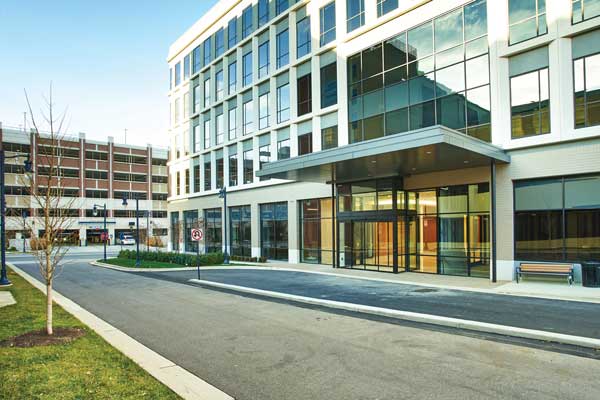
Medical Pavilion II at National Harbor features a covered patient drop-off area and a dedicated valet service for ease of access. Courtesy of Rethink Healthcare Real Estate
Outpatient visits now account for a significant majority of health system interactions nationwide. Federal analysis from the Medicare Payment Advisory Commission shows outpatient service utilization per capita is rising, while inpatient volumes remain below prepandemic levels. Health systems and large specialty groups are expanding neighborhood-based access points for primary care, urgent care and access to various specialist types. The economic rationale is straightforward: While a patient may require surgery or advanced treatment at a hospital, the initial consultation and follow-up care can occur in a community-based setting. In short, hospitals are coming to the patient rather than requiring the patient to come to the hospital.
In an age when commute times and ease of accessibility drive incentive, this model allows systems to maintain revenue capture for higher-acuity procedures and lower barriers to entry for routine visits. It also provides an opportunity for increased brand visibility in competitive markets, where hospital systems are expanding beyond traditional geographic limitations.
Within a mixed-use district where residential density, hospitality and retail converge, the embedded medical asset becomes both a service node and a brand extension strategy.
Purpose-built vs. Conversion: A Development Reality Check
These assets are not limited to upscale suburban mixed-use environments. They are increasingly being integrated into urban infill and regional mixed-use districts where access and visibility are strongest. Unlike urgent care’s transactional model, purpose-built medical office supports a broader continuum of care within an integrated setting. Projections from Sg2, a Vizient company, that show outpatient volumes growing 18% over the next decade compared with 5% for inpatient care reinforce this shift.
The migration of health care into mixed-use environments has coincided with another market dynamic: elevated vacancy in traditional office. Many office landlords have explored conversion to medical use as a repositioning strategy. In practice, however, conversion frequently underestimates the technical requirements of clinical tenancy. Investors and decision-makers need to consider several key elements when designing and selecting the right site for their space.
Parking ratios and patient churn: Medical parking demand is fundamentally different from office parking demand. Staff parking must be accommodated alongside constant patient turnover throughout the day. National benchmarks for MOB parking often range from 4.5 to 6.0 spaces per 1,000 square feet, depending on specialty mix and ambulatory components — typically higher than traditional office requirements.
In medical underwriting, insufficient parking remains one of the most common performance constraints. Successful Class A spaces often design a built-in parking garage for patients and staff. Shared parking can be effective in mixed-use environments, but total capacity and ease of access are critical for any medical space.
Elevator and surgical compliance: Certain specialties require elevators capable of accommodating gurneys and meeting surgical certification standards. Retrofitting elevators in an office building can be cost prohibitive or physically impractical. Purpose-built medical buildings incorporate appropriately sized elevator cores from inception, supporting a broader range of clinical uses.
Wet stack density and plumbing: Medical tenants require significantly more plumbing infrastructure than traditional office users do. Wet stack placement — or the vertical alignment of plumbing infrastructure, specifically the centralized risers that carry water and drainage through a building — influences suite flexibility and the cost of construction and tenant improvement. Buildings initially designed for traditional office tenants feature limited wet stack locations, forcing expensive plumbing costs during conversion. Purpose-built medical buildings incorporate distributed wet stacks, enabling efficient layouts for 2,500- to 3,000-square-foot suites, which is the common size range for many specialty practices.
Floor plate depth and layout: Many office buildings were designed for large, full-floor users and thus utilized deep floor plates. This can create inefficient layouts for smaller medical suites, resulting in “bowling alley” configurations with limited natural light at the window line.
Design for ADA compliance and patient drop-off: Clinical assets require intentional drop-off zones, entries that comply with the Americans with Disabilities Act (ADA), and accessible pathways that function seamlessly for patients with mobility constraints. While office buildings may meet minimum code requirements, they are rarely optimized for high-volume patient circulation.
Collectively, these factors illustrate why ground-up, purpose-built medical assets often outperform conversion strategies when attracting Class A clinical tenants.
Intentional Design vs. Opportunistic Conversion
Beyond technical infrastructure constraints, there is a more straightforward challenge amid discussion of adaptive reuse: Traditional office buildings were never designed with clinical needs in mind.
Office architecture over the past two decades has emphasized collaborative environments, open floor plans, flexible tenant demising and amenity-driven workplace experiences. Ceiling heights, glazing patterns and other elements are maximized for corporate efficiency and tenant churn — not for exam rooms, imaging suites or procedure spaces that require privacy, acoustic control and strict spatial adjacencies.
Victor Lorenzo, who leads the San Diego studio for MBL Architects, which has experience designing major office campuses and mixed-use districts, noted that “office buildings are intentionally designed for a different end user. The structural grid, core placement and circulation patterns are optimized for collaborative workspace, not clinical workflow. When you retrofit without respecting that intent, inefficiencies can compound quickly.”
That distinction matters because clinical design is not simply about dividing space differently. Medical space requires reinforced floor loads for imaging equipment, specialized mechanical systems for air exchanges, medical gas pathways in certain cases, and sound attenuation standards that exceed typical office specifications.
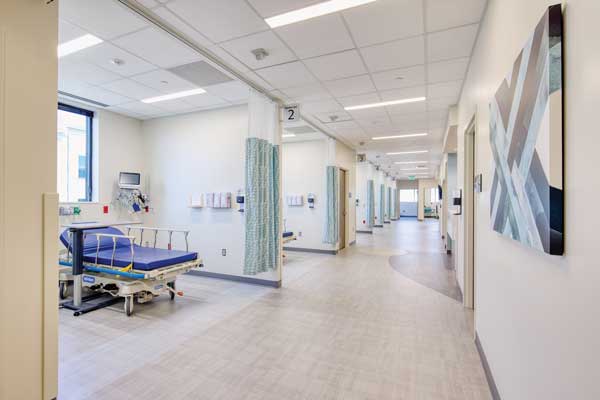
Tenants benefit from a strong referral ecosystem within the Class A medical campus at National Harbor. Courtesy of Rethink Healthcare Real Estate
While office corridors are designed for employee circulation, medical corridors must accommodate wheelchairs, gurneys and two-way patient movement without congestion. This is challenging to incorporate in prebuilt office spaces, which weren’t designed to anticipate use by a high volume of patients with accessibility challenges. This issue is only reinforced when considering other needs, like waiting areas for family members or restrooms requiring ADA accessibility.
In many office conversions, developers find themselves working against the building’s original geometry. In the case of MOBs, the result can be excessive tenant improvement costs that sophisticated clinical operators ultimately reject.
This does not mean that office conversions are impossible. In certain markets, adaptive reuse may be viable where structural conditions align and specialty requirements are limited. However, for Class A clinical tenants, intentional design from inception typically provides greater long-term use. When the goal is to anchor a mixed-use district with durable, referral-driven medical tenancy, infrastructure decisions are critical.
Regulatory Dynamics and Jurisdictional Strategy
Regulatory requirements have a large influence on where surgery centers and certain outpatient services can operate, and these requirements often vary. In many states, certificate of need (CON) laws regulate the establishment of ambulatory surgery centers and imaging facilities.
In jurisdictions with restrictive CON environments, independent physicians may face significant barriers to opening facility-based services. In neighboring jurisdictions with more permissive frameworks, those same providers may be able to operate surgery centers and capture facility fees directly. This dynamic creates a site selection lens that extends beyond demographics and traffic counts. Where surgery-friendly policies exist, ambulatory demand may be structurally stronger, supporting both lease-up and long-term valuation.
Class A Ecosystems and Referral Synergy
Successful medical buildings function as ecosystems where primary care providers refer to specialists, then those specialists coordinate with imaging, laboratory and pharmaceutical services. In the same way that closely located retailers and entertainment destinations create synergistic spaces, proximity enhances convenience for patients and operational efficiency for health care providers.
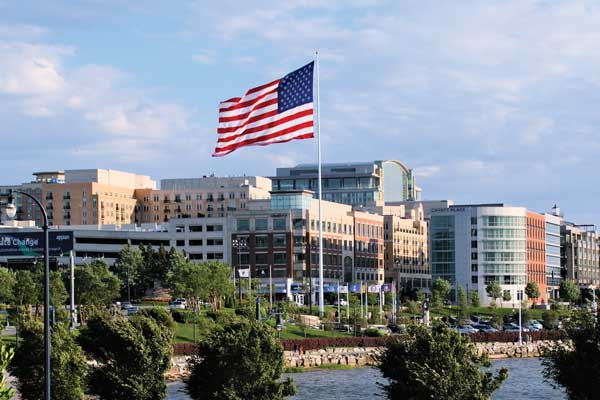
Patients routinely access services at the medical campus and then utilize a variety of amenities within National Harbor’s larger lifestyle-oriented district. Neal McNeil via iStock Editorial/Getty Images Plus
A strong tenant strategy under the live-work-play-health model focuses on assembling complementary practices capable of creating referral synergies within the building. A typical MOB stack may include one larger anchor user complemented by numerous 2,500- to 3,000-square-foot specialty suites.
For instance, large spaces at National Harbor are leased by Adventist HealthCare and the University of Maryland Medical System, both of which have long-term commitments comprising entire floors of Medical Pavilions I and II, respectively. Their operations attract a steady stream of potential retail consumers to the mixed-use district while also feeding medical referrals to independent specialists located on-site.
Winston Williams, senior vice president at Gittleson Zuppas Papantoniou Medical Realty, a leading MOB brokerage in the Washington, D.C., metro area, emphasized that “a healthy medical building benefits from strong synergies among tenants. When referrals stay within the building, the experience improves for patients and stability improves for the asset.”
Within National Harbor’s broader live-work-play-health district, that synergy extends beyond the building envelope. Patients can access services at Medical Pavilion I and II, then utilize adjacent wellness amenities such as fitness facilities, retail and dining. For staff, proximity to amenities improves recruitment and retention relative to isolated suburban office parks or medical campuses. The result is not merely a convenient location but also an integrated, health-oriented environment.
As Malika Peltier, managing director at Rethink Healthcare Real Estate, the owner of Medical Pavilion I and II at National Harbor, explained, “When medical is integrated into a mixed-use district, it becomes a stabilizing anchor. Health care brings consistent daytime activity, supports surrounding retail and hospitality uses, and ultimately strengthens the long-term performance of the entire environment.”
Case Study: Medical Pavilion I and II at National Harbor
Built in 2019 and 2022, Medical Pavilion I and II at National Harbor comprise purpose-built Class A medical space embedded within a larger mixed-use district. The buildings, which together span over 185,000 rentable square feet (92,945 square feet at Medical Pavilion I and 93,278 square feet at Medical Pavilion II), were designed specifically for clinical use. They incorporate surgical-ready infrastructure such as a gurney elevator, distributed wet stacks and patient-oriented circulation.
Both sites hold five floors and three elevators, and include amenities such as:
- An imaging center and radiology lab.
- A 19,352-square-foot orthopedic surgery center.
- A gastroenterology suite.
- A plastic surgery suite.
- A variety of multispecialty uses.
- An 11,500-square-foot multispecialty surgery center.
- Access to a 10,000-square-foot parking garage.
A location within walking distance to National Harbor’s dense, amenity-rich environment aligns with outpatient decentralization trends. Nearby residential density, hospitality and entertainment generate consistent activity. Accessibility from major regional highways, including the Washington Beltway and Interstate 295, enhances draw from the Maryland, Washington, D.C., and Northern Virginia markets.
The project also reflects forward-thinking capital strategy, with Rethink Healthcare Real Estate recognizing the opportunity to integrate health care into a mixed-use district. “We approached the project with a long-term ownership mindset from day one,” Peltier said. “Partnering institutional capital with experienced development allowed us to deliver purpose-built medical space that can perform for decades.”
That strategy ultimately culminated in the approximately $51 million recapitalization of Medical Pavilion I with joint venture partner Trammell Crow Company following the building’s completion and substantial lease-up. By investing in purpose-built medical infrastructure rather than retrofitting traditional office product, the development is well positioned to attract high-credit, Class A clinical tenants seeking long-term operational functionality. Today, the development is diversified across multiple complementary medical specialties, including high-performing ambulatory surgery center space, underscoring how thoughtful regulatory and geographic positioning can create a competitive advantage for medical assets within mixed-use environments.
The Evolving Mixed-use Framework
The integration of health care into mixed-use districts represents structural changes in outpatient delivery, demographic demand and regulatory economics. As capital continues to seek resilient asset classes, purpose-built medical embedded within community density offers a compelling argument.
Sites like Medical Pavilion I and II illustrate how live, work, play and health can operate not as parallel components, but as a unified development strategy. For developers nationwide, the question is less about whether health care belongs within mixed-use environments and more about how intentionally it is executed.
Peter Papantoniou is principal, Gittleson Zuppas Papantoniou Medical Realty.
About National HarborNational Harbor, developed by Peterson Companies, features 350 acres of waterfront resort space along the Potomac River, south of Washington, D.C. It includes 160 stores, 40 restaurants and the Capital Wheel, a 180-foot observation wheel. National Harbor is also home to the Gaylord National Resort and Convention Center, with almost 2,000 rooms and 600,000 square feet of meeting space, and MGM National Harbor, an integrated luxury entertainment resort featuring a 3,000-seat theater and one of the largest gaming floors outside of Las Vegas. National Harbor has more than 2,000 residents and attracts more than 12 million visitors per year. |
Practical Takeaways for DevelopersFor development professionals evaluating whether and how to incorporate medical into mixed-use projects, there are several lessons to keep in mind: Underwrite parking conservatively. Medical demand patterns differ from office. High patient churn requires robust ratios and easy access. Design for medical from inception. Elevator cores, wet stacks and suite depth materially affect tenant viability. Evaluate regulatory climate. Certificate of need (CON) environments and jurisdictional boundaries can influence surgery center demand and long-term asset value. Build tenant ecosystems intentionally. Referral synergy enhances both tenant performance and building stability. Position Class A accordingly. Premium medical environments attract operators aligned with quality, compliance and long-term presence. |