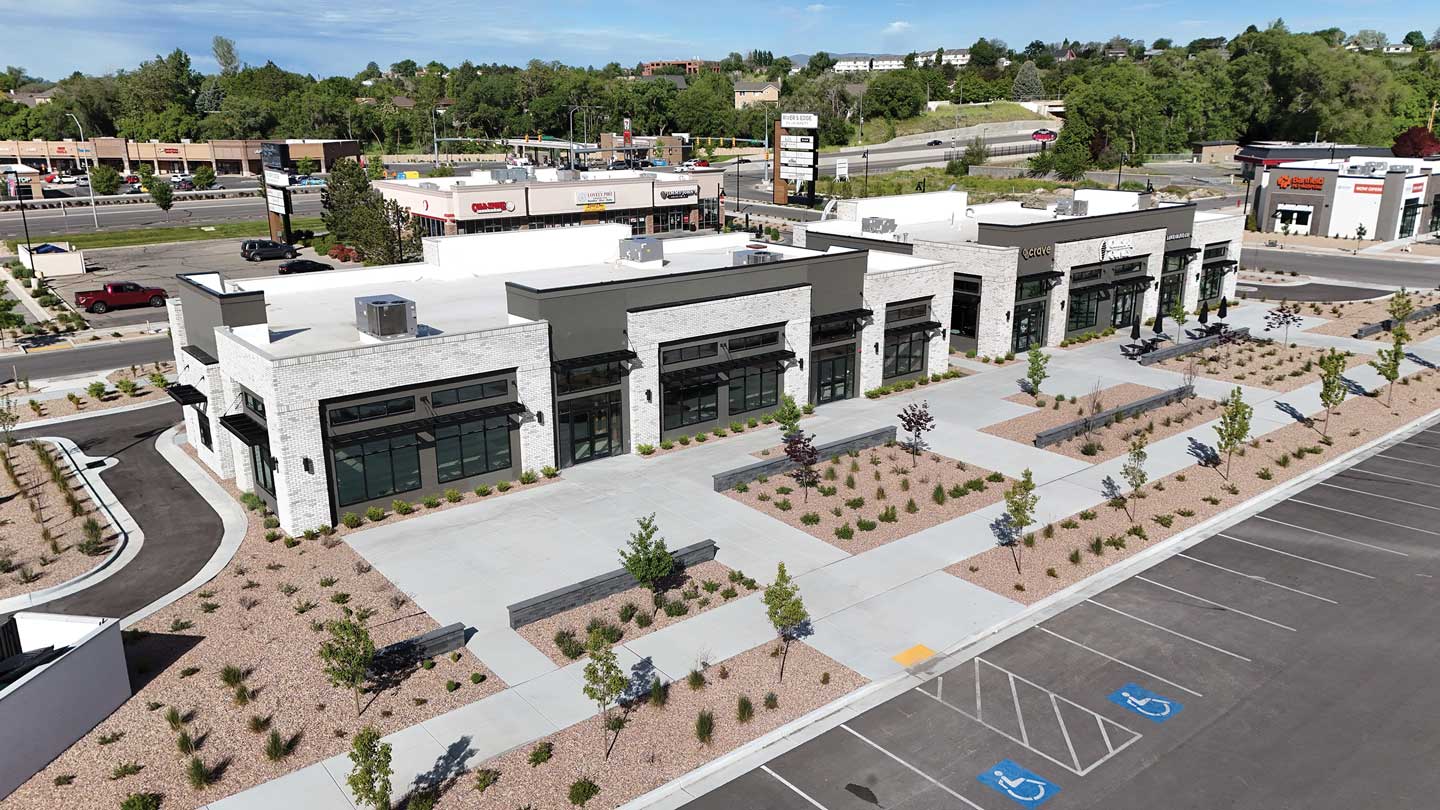
Disciplined structure and the right markets can create an advantage while others wait for clarity.
The commercial real estate market has not lost opportunity. It has become far more selective about what deserves confidence.
Uncertainty has a way of doing that. It strips away the easy deals, exposes weak assumptions and forces every buyer, lender and broker to get honest about what really drives outcomes: basis, structure
and execution.
For senior-level development professionals, this shift creates both challenge and opportunity. The current environment features fewer “easy wins” and more situations where timing is determined by the capital stack, not the real estate. The rewards go to those who can find opportunity where others see only uncertainty.
Why Timing Feels Harder Right Now
Three macro forces are colliding simultaneously, creating an environment where traditional timing strategies fall short.
Cost of capital: The cost of capital has stayed higher, longer than many models anticipated. That shift has reset cap rates, reduced leverage and made “good deals” fail on math alone. CBRE’s 2025 U.S. real estate outlook highlighted the risk that rates remain “higher for longer,” even as investment activity gradually improves.
The maturity wave: A major maturity wave is turning into a decision wave. The Mortgage Bankers Association estimated that about 20% of outstanding commercial mortgages — roughly $957 billion — matured in 2025, often pushing owners into refinance gaps as proceeds retrade under current underwriting.
Tightening underwriting and risk management: Underwriting and risk management expectations have tightened, especially for CRE-concentrated institutions. The Federal Deposit Insurance Corp. (FDIC) has emphasized strong capital, appropriate allowance levels and robust credit risk management for banks or other lenders managing CRE concentrations in a challenging environment.
Layer in uneven property fundamentals depending on sector and market, and the result is a familiar standoff. Buyers underwrite today’s reality while sellers remember yesterday’s pricing. That gap does not close with optimism. It closes with structure and with buyers who can underwrite multiple outcomes without losing conviction.
A Practical Definition of Market Timing in 2026
In uncertain times, market timing is rarely about calling the bottom. It’s about buying optionality.
For professionals building wealth through a combination of cash-flow compounding and equity creation via value-add strategies, the playbook becomes simpler: Time the basis and the structure, not the headlines. There is an opportunity to capitalize by structuring flexibility while others wait for certainty that may never arrive.
That approach does not mean taking blind risks. It means acquiring assets where firms can survive the stress case and still have meaningful upside when markets normalize.
The following market-timing strategies work right now.
Buy ‘Basis’ Where the Capital Stack Is Breaking
Some of the most attractive acquisition opportunities currently are not “distressed” in the classic sense. Rather, they are misaligned.
Refinance gaps are showing up because loans originated in a different rate regime are maturing into today’s underwriting reality. Many assets are still viable, but the debt is not. The Federal Reserve Bank of St. Louis points directly to repricing risk as borrowers face refinancing at higher rates alongside weakening valuations and pressure on net operating income in parts of the market.
Among the signs to look for are:
- Loans hitting maturity with proceeds meaningfully below the payoff.
- Sponsors facing “gap equity” needs even on performing properties.
- Partnership friction from buyouts, dilution or recap fatigue.
- Assets where fundamentals are intact but capex and reserve needs were undermodeled.
This creates a timing edge because it doesn’t involve waiting for rates to fall. The strategy involves buying when the market is forced to reprice capital structure risk. When entered at the right basis, value-add equity creation becomes more achievable because the deal starts with realism.
Risk control requires underwriting refinance as a probability, not a plan. If the deal only works if rates fall, that’s not a strategy — it’s a bet.
Underwrite Capex Like It’s Part of the Purchase Price
Capital expenditure surprises are deciding deals now. Roofs, HVAC, life-safety, property improvement plans, facades, parking lots and unit turns are not “later.” They are immediate drivers of debt-service coverage ratio (DSCR) durability and can impact the ability to refinance.
In tight credit conditions, deferred maintenance does not just reduce value. It reduces liquidity because lenders and buyers price uncertainty aggressively.
Disciplined underwriting requires treating capex and deferred maintenance as a use of proceeds, not a footnote. Reserve appropriately and model timing honestly. Underwrite stabilization periods longer than is wanted. Stress DSCR on the cash-flow reality after capex timing, not before.
This is where experienced entrepreneurs win. The market rewards operators who can see around corners, price the real cost of execution and still structure a transaction that closes.
Target Overlooked Growth Nodes
In uncertain times, capital crowds into the obvious. That’s why some of the best timing opportunities show up where growth is real but the narrative has not fully priced it in.
One category to watch closely is AI-driven growth nodes beyond headline tech markets. This includes construction projects for server farms and data centers, high-capacity data grids, fiber-optic networks and, increasingly, AI user hubs or specialized cooling infrastructures. Think here of data-adjacent development, specialized manufacturing and the service economy that follows, including housing, hospitality, medical, retail services and light industrial. A second category is infrastructure-led corridors featuring markets with tangible drivers such as transportation improvements, reshoring-linked suppliers, logistics connectivity and public/private investment that creates sticky employment.
This matters for timing because if the entry basis is reasonable and demand is being built underneath, cash flow can be compounded while executing a value-add plan. The need isn’t to “win the cycle.” The need is to win the basis and then execute.
The discipline is to remain rigorous. Overlooked does not mean unproven, but it can mean less competition for those willing to do the work.
Reset Borrower Expectations Early
This strategy matters to every persona: brokers, lenders, borrowers and aggregators. In the current market, deals often die late because borrower expectations were set early using outdated assumptions: proceeds, pricing, timing, capex, exit caps and “best case” rate scenarios.
The most valuable thing that can be done right now is to have the honest conversation earlier than everyone else. What that looks like in practice is replacing hope with scenarios: base case, stress case, severe stress. Make the borrower state what must be true for the deal to work. Identify the trade before it becomes a surprise: price, reserves, structure, interest only, hold period or business plan. Confirm capital sources early because timing is not just about the asset; it’s about the certainty of execution.
Borrowers who accept today’s reality early can move faster, negotiate more effectively and maintain credibility with capital partners. Borrowers who resist reality lose time — and timing is expensive right now.
Disciplined Underwriting in Today’s Market
Successful market timing requires specific underwriting discipline that aligns with both market realities and regulatory expectations.
Successful financing across asset types requires this discipline. The common denominator is not property type but rather the quality of sponsorship, clarity of the business plan and defensibility of cash flow.
The approach in this market is intentionally disciplined: up to 75% loan-to-cost/70% loan-to-value when the story is sound and downside is underwritten, and a minimum DSCR of 1.25x as a target, with various stress tests that ensure a minimum of 1.00x the DSCR is achieved within these asset-stressed constraints, ensuring the deal does not depend on perfect execution.
This aligns with what regulators are emphasizing across the system: robust risk management and clear discipline where CRE concentration exists. Confidence today is not created by leverage. It’s created by structure, transparency and execution plans that survive the stress case.
Principles for Successful Market Timing
Professionals who build wealth in CRE during uncertain times are rarely those who guess the next rate move correctly. They are the ones who enter at a defensible basis, underwrite capex and refinance risk with precision, target demand nodes that are real but overlooked, and structure transactions with flexibility.
Success requires focusing on fundamentals over forecasting, maintaining discipline around defensible entry points, and building competitive advantages through precise execution while others wait for perfect market conditions that may not materialize.
Sanat Patel is chief lending officer and co-founder of AVANA Companies.