Performance and precision take center stage while old city labels fade in importance.
For decades, the iconic gateway cities of New York, Los Angeles, Boston and San Francisco were considered the unshakable giants of commercial real estate investing. Their prestige, deep liquidity and reliable returns set the industry standard.
Over the years, however, the landscape has shifted. Investors began looking beyond legacy hubs, turning their attention to more affordable, up-and-coming cities, particularly in the Sun Belt. Markets such as Austin, Texas; Nashville, Tennessee; Raleigh-Durham, North Carolina; and Charlotte, North Carolina, have grown into consistent performers, attracting capital that previously stayed parked in gateways.
The pandemic and remote work accelerated this transformation. Freed from office locations, people pursued affordability and opportunity, with many heading South for cheaper housing, better job prospects and a higher quality of life. Companies followed, drawn by lower taxes and fewer regulations. Investors chased bigger returns and easier access than on the coasts. Secondary cities stepped up to meet these new demands.

Steel House, a design-driven modern workplace developed by Beacon Capital Partners and Elevation Development Group, features one of Denver’s most expansive amenity collections. The Park, a 13,000-square-foot landscaped oasis, serves as its centerpiece. Photography by Chase Daniel, courtesy of Beacon Capital Partners
Although the peak pandemic rush has eased, the momentum toward the Sun Belt and secondary markets remains strong and continues to drive growth. This continuing trend reinforces their reputation as magnets for talent and investment.
According to CBRE’s 2026 North America Investor Intentions Survey, Charlotte and Nashville have broken into the top 10 U.S. investment markets. Secondary cities, previously considered risky, now anchor investor portfolios. And growth isn’t limited to the Sun Belt. The Mountain West — including Phoenix, Denver and Salt Lake City — has become a hub for tech investment. The Midwest — including Kansas City, Indianapolis, and Columbus, Ohio — is recognized for its resilience and consistent yields.
Blurring Boundaries
As 2026 progresses, the distinction between gateway and secondary markets continues to fade. Investors are no longer focused solely on popular Sun Belt hot spots or famous Manhattan ZIP codes. Instead, they’re prioritizing local market fundamentals and evaluating assets on their individual merits. The focus has shifted to securing reliable returns and ensuring resilient operations rather than relying on a city’s reputation or rapid growth.
Industry leaders such as CBRE, Cushman & Wakefield and J.P. Morgan emphasize that strong cash flow and asset performance now carry more weight, with institutional investors — including pension funds, private equity and REITs — seeking steady, risk-adjusted returns despite elevated interest rates and ongoing market volatility.
This change is particularly evident in the data center sector, where decisions about expansion are driven by access to power supply, infrastructure, land and connectivity — sometimes in places that aren’t traditional tech locations.

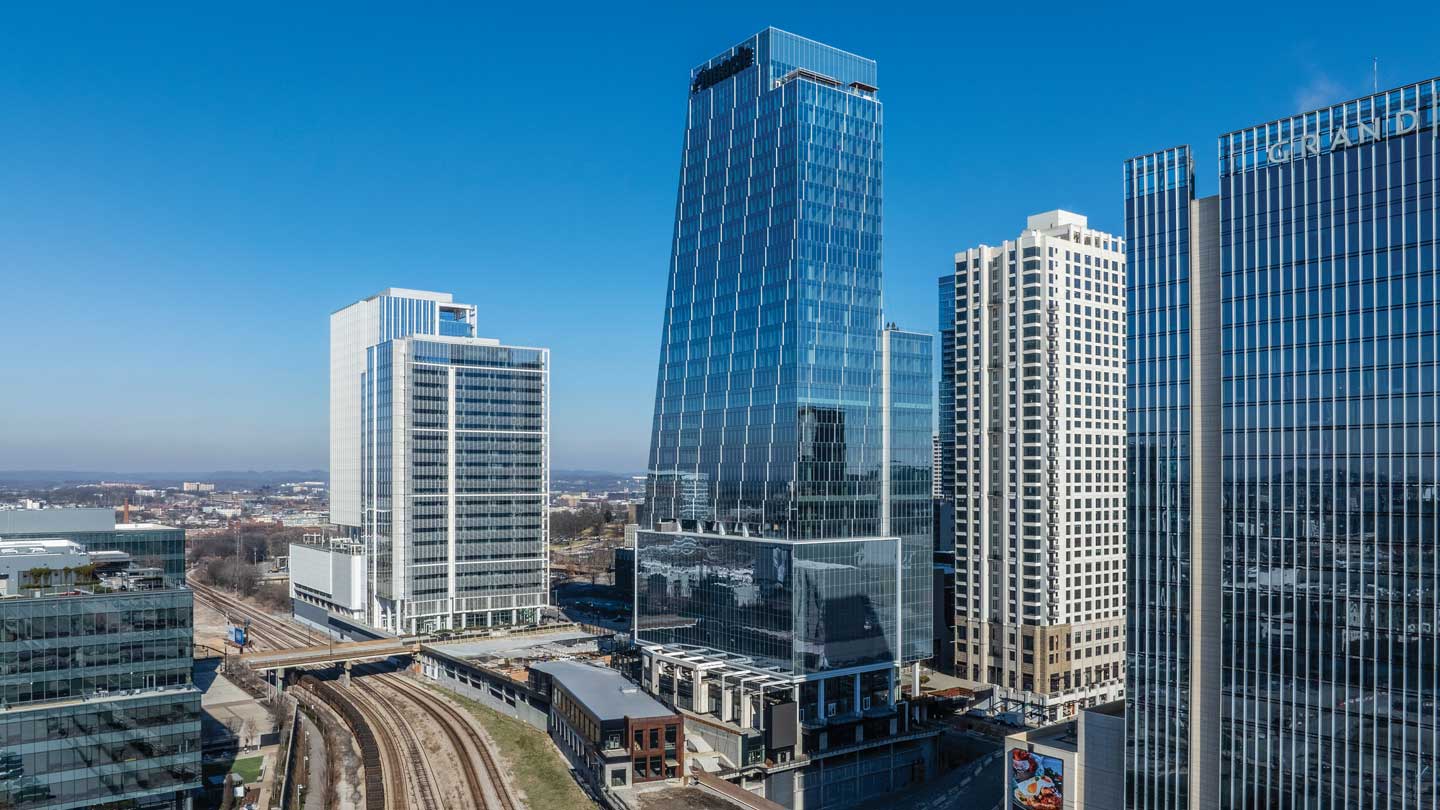
The Pinnacle Tower at Nashville Yards, designed by Gresham Smith, is a 35-story multitenant office tower and headquarters to Pinnacle Financial Partners. The 1.5-million-square-foot building features office, retail and amenity space. Chad Baumer Photography
Cities such as Charlotte and Salt Lake City are emerging as data center hubs, supported by advanced infrastructure that surpasses established tech markets. Hyperscale companies and energy developers are investing heavily in modular microgrids, small modular reactors and liquid cooling technology to support AI demands and are willing to pay extra for reliable energy, according to Prologis’ 2026 Supply Chain Outlook and JLL’s “Where Energy Meets Property” insights report. As Prologis noted, “location, resilience, reliability” is the new rule.
This change is happening across the real estate industry.
“We’ll see much more dispersion across markets within each asset class and across the quality spectrum of assets,” said James Bohnaker, senior economist at Cushman & Wakefield. “Local market fundamentals will drive portfolio performance over the next five to 10 years,” no matter the city’s size or reputation.
The era when “falling rates helped lift returns pretty much universally across markets and sectors” has passed, Bohnaker said. Now, local factors like job growth, demographics, cost of living and regulations have more say in shaping performance than do broad economic trends.
Narrowing the Spread
Also blurring the line is cap rate compression. Institutional capital is pouring into cities previously perceived as being “too small” but now increasingly regarded as reliable options for long-term investment, which is increasing competition and pushing up pricing.
As a result, the gap between cap rates in major gateway hubs and secondary markets is shrinking, especially for multifamily and industrial assets.
“We have seen cap rate spreads between primary gateway and secondary markets narrow significantly, reaching what I would describe as historic lows,” said Will Milam, head of the U.S. for Morgan Stanley Real Estate Investing.
CBRE’s 2026 Market Outlook cautions investors not to rely on cap rate declines to drive returns. Only minor compression — 5 to 15 basis points — is expected, so steady property income and strong asset management will be critical.
Tommy Lee, CBRE’s co-head of capital markets for the U.S. and Canada, said, “Cap rates appear to have largely reached their peak and are expected to remain relatively stable over the next year, with modest compression possible.”
He explained that tightening will likely be more measured than in prior cycles, as long-term benchmark rates are expected to remain elevated. “Overall, we expect cap rates in these secondary markets to move broadly in line with national trends rather than diverge materially,” he added.
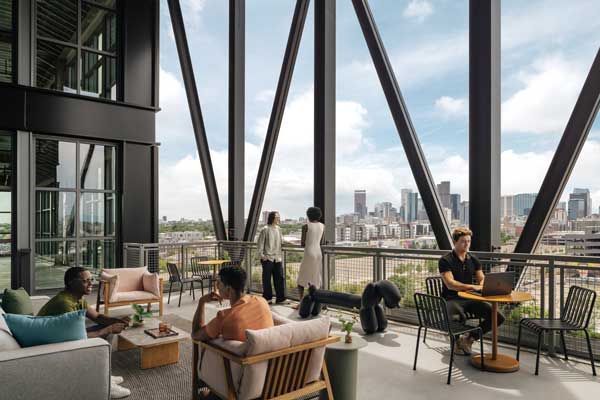
Steel House offers over 300,000 square feet of wellness-first work environments, with the highest indoor/outdoor space ratio in Denver and private tenant terraces on every floor. Photography by Chase Daniel, courtesy of Beacon Capital Partners
For example, in Austin and Phoenix, multifamily assets are now trading at cap rates much closer to those in primary cities. Previously, investors could count on roughly a 100 to 150 basis point spread between gateway and secondary markets, which helped offset the perceived higher risks and lower liquidity compared to established hubs.
“That extra yield, alongside stronger job and population growth, made it easier to justify investing beyond New York, San Francisco or Boston into emerging metros,” Bohnaker noted. Now, the math looks different.
As pension funds and private equity firms pump capital into secondary cities, the yield gap with traditional markets is disappearing. Investor demand and confidence increased in the Sun Belt and other select secondary cities, making them essential, reliable investments. Now, risk and return matter more than location alone, and these markets have become core elements of national portfolios.
Gateway Recovery vs. Sun Belt Reboot
Gateway hubs are now recovering after a tough period, while the Sun Belt — which experienced a multifamily building boom — is cooling as units gradually fill up.
CBRE’s market outlook highlighted New York and San Francisco as leaders in the urban rebound, driven by AI and financial services. Investor confidence is rising, pushing demand for prime offices and luxury apartments in city centers. In contrast, Austin and Phoenix are seeing higher vacancies and slower rents after a surge in new apartments from 2021 to 2022. However, stabilization is underway as excess units are absorbed.
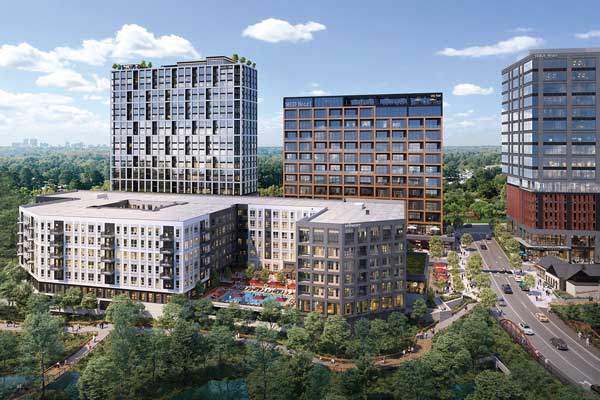
Kane Realty Corporation broke ground earlier this year on Tributary, the newest residential community within the North Hills Innovation District in Raleigh, North Carolina. Tributary will deliver 332 apartments and 6,000 square feet of ground-level retail and include a digital content creation studio. Courtesy of Kane Realty Corporation
Apartments.com, using CoStar data, reported that national multifamily construction starts have plummeted 71% since their peak in the first quarter of 2022.
Many investors are refocusing on premium gateway assets for short-term gains, even as key Sun Belt and interior markets remain attractive due to solid fundamentals.
Bohnaker sees the best opportunities “in a narrower set of fast-growth secondary markets — Austin, the Dallases of the world, and across the Southeast, places like Raleigh, Nashville and Atlanta. … Those have been the outperformers on economic and demographic fundamentals, and that’s what will draw investors back to preferred Sun Belt markets over the next couple of years.”
Jimmy Hinton, chief revenue officer for Newmark Capital Markets, said investors are increasingly focused on what he calls “good old-fashioned success markets” like Charlotte; Columbus; Indianapolis; San Antonio; Greenville-Spartanburg, South Carolina; and Richmond, Virginia.
According to Hinton, these are underinvested markets where fundamentals remain strong and growth is sturdy. “At the moment, investors feel that secondary markets are giving them a good risk-adjusted return in a steady interest rate environment,” he said.
Micromarket Research: The New Competitive Edge
With cap rates tightening, the key to outperformance lies not in simply picking the “right city,” but in making smart decisions about which assets to select and how effectively they are managed.
Competition is intensifying as investors zero in on neighborhoods with strong job and wage growth. Many Sun Belt and tech hub cities now rival traditional gateway markets in terms of talent pool and infrastructure.
“Employment fundamentals are one of the most significant factors in our decisions to expand or invest in any secondary market,” said Scott Kirchhoff, principal at Trammell Crow Company and its residential subsidiary, High Street Residential (HSR). “They serve as a core component of our investment thesis, since sustained, high-quality job creation is among the strongest signs of long-term housing demand.”
A central question arises: Which came first to these emerging markets — the employees or the jobs? Current findings indicate a talent-led cycle in which employees are drawn by lifestyle and affordability, and companies follow to tap into expanding labor pools. Ultimately, capital flows to where employment and opportunity are strongest.
Jake Muse, senior vice president at HSR in Nashville, emphasized that developers are especially attracted by “the alignment of institutional capital” in rapidly growing regions with robust economies. For example, he said, Nashville’s population growth “is driven not just by volume but by an influx of high-earning households,” as well as diversified job creation and strong absorption rates.
Muse also noted these markets are “relatively affordable compared to gateway cities,” which supports rent growth, while their “business-friendly environments further enhance the appeal.” He pointed to Tennessee’s lack of a state income tax, low property taxes and competitive corporate tax rates as compelling factors for investors and developers.
Selectivity as a Core Strategy
Experts note that the era of broad, across-the-board market gains has ended. In the current economic climate, deliberate asset selection and a precise understanding of local markets are essential.
Milam’s team at Morgan Stanley reflects this approach, prioritizing focused selection in both primary and secondary markets. “We don’t take a broad-brush approach but rather cherry-pick assets where cap rates do not yet fully reflect future growth potential,” he explained.
“In this environment, disciplined asset selection and a highly targeted submarket strategy are critical,” CBRE’s Lee said. “Investors who focus on operational execution and durable income growth will be best positioned to navigate these conditions.”
“The real risk,” Milam cautioned, “is supply dynamics and finding assets that can deliver outsized growth.” Pinpointing opportunities that can drive rent and income growth is vital. The challenge, he said, is identifying assets with above-average return potential rather than assuming strong performance across an entire market.
With the simple cap rate gap between primary and secondary markets no longer doing the heavy lifting, investors must look at jobs, population flows, sector mix, supply pipelines and local policy to decide which secondary markets will earn their place in the next cycle.
Hinton of Newmark Capital Markets summed it up: “Commercial real estate is an exceptionally idiosyncratic asset class. Risk and returns depend not just on location but also on your neighbors, microneighborhood dynamics, city council politics, and the financial budgets of the city, county and state.”
A Deeper Dive
Traditional geographic boundaries and market labels are quickly losing relevance. Now, the spotlight is on tracking sector and asset performance and spotting where the next big opportunities will emerge. Here are the sectors driving growth:
Multifamily
Construction growth in Sun Belt cities led to a surge of new apartments, slowing rent growth and causing double-digit percentage declines in rents for areas like Austin and Raleigh-Durham, according to Rob Filley, senior analyst and co-head of U.S. market analytics at Green Street. However, vacancy rates are dropping as supply is absorbed, and several regions are returning to normal levels. Barriers to homeownership continue to support demand for apartments, with CBRE’s intentions survey reporting that 74% of investors plan to target multifamily this year.
The Corcoran Group reported the Manhattan apartment vacancy rate was just 1.93% in January.
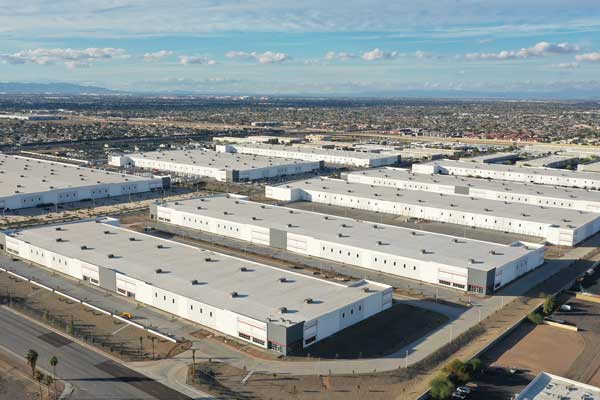
CapRock Partners, a privately owned investor and developer of industrial real estate, recently secured a 597,357-square-foot-lease from a global advanced energy storage systems manufacturer across two freestanding warehouse buildings at CapRock West 202 Logistics Phase 2. The 3.4-million-square-foot Class A campus, the largest speculative industrial development in Phoenix, is approximately 82% leased. Courtesy of CapRock Partners
Filley noted that San Francisco’s rents are only about 5% above prepandemic levels. With rising incomes and limited new supply, “San Francisco seems to have already bottomed out,” he said.
Midwestern cities like Cleveland and Columbus show unexpected strength, with solid fundamentals, cap rates in the high 5% to low 6% range, and extra yield due to minimal new supply. “The Midwest has probably been the biggest surprise for Green Street over the last couple of years in terms of fundamentals,” Filley said.
Industrial
Industrial is undergoing transformation as capital shifts from crowded coastal markets to interior regions with stronger fundamentals. Secondary hubs like Indianapolis have seen milder price corrections due to more balanced supply and demand, unlike the steep declines in some coastal cities.
The real issue isn’t “gateway versus secondary,” Bohnaker said, but rather which markets overheated. Coastal cities that depend on imports and experienced rapid construction are seeing the largest declines, making them particularly vulnerable to shifts in global trade.
Cushman & Wakefield reported the Inland Empire’s industrial vacancy rate was 8.1% in the fourth quarter of 2025, well above the 10-year annual average of 4%, driven by record-breaking supply and a sharp drop in tenant demand.
Interior markets in the Sun Belt and Midwest have maintained healthier vacancy rates and steadier rent growth. As noted in a JLL industrial market dynamics report for the third quarter of 2025, Savannah, Georgia, is thriving thanks to port expansion. Also, Minneapolis, Columbus and Louisville, Kentucky, stand out for their affordability, strong business climates and robust logistics networks.
“Industrial demand is migrating away from the highest-cost coastal markets because the economics just work better in the interior,” said Thomas LaSalvia, Ph.D., head of commercial real estate economics at Moody’s Analytics.
“Tenants can secure more modern space at a lower total cost while also sitting closer to major population centers rather than a single port,” LaSalvia said. He added that Phoenix is emerging as an attractive alternative to Southern California, offering stronger financials and a business-friendly environment.
Office
The office sector has been volatile, especially in gateway markets, which experienced steep corrections as remote and hybrid work shifted demand.
However, demand is turning a corner. Gateway cities are seeing a selective comeback, particularly for trophy assets and those benefiting from AI-driven technology growth. Meanwhile, some secondary office markets show greater resilience and recovery potential.
“Charlotte and South Florida are gaining positive momentum, driven by favorable industry composition, population inflows and improving fundamentals,” Lee said.
Nashville is noteworthy for attracting major tech companies like Oracle and Amazon, supported by a strong local economy and low unemployment, according to a Cushman & Wakefield MarketBeat Report in January.
Cushman & Wakefield forecast growth in a mix of primary and secondary markets for 2026, including San Francisco, Austin, New York, Atlanta, Dallas, Nashville, and San Jose, California. The firm noted these cities recorded strong positive absorption in 2025, fueled by AI investment and widespread economic development.
Data Centers
The data center boom, fueled by hyperscale demand and AI workloads, is pushing developers and investors out of power-constrained hubs like Northern Virginia and Silicon Valley and into secondary markets with more reliable utilities and
stronger incentives. Cities like Salt Lake City, Columbus, Austin and San Antonio are emerging as new hot spots for data center expansion.
Meanwhile, primary hubs are experiencing unprecedented tightness. According to CBRE’s North America Data Center Trends H2 2025, vacancy rates in primary markets fell to a historic low of 1.4% at the end of the year.
Retail
Oxford Economics projects retail as the only sector to exceed prepandemic returns over the next five years, thanks to robust demand and tight supply, especially in Sun Belt cities like Fort Worth, Nashville and San Jose, and in gateways like New York and San Francisco. In contrast, cities with higher rates of new supply, such as Austin, Houston, Las Vegas and Orlando, may underperform despite ongoing demand.
Placer.ai named Salt Lake City; Reno, Nevada; Indianapolis; Raleigh-Durham; and Tampa-St. Petersburg, Florida, as markets to watch in 2026 for exceptional population growth and retail/dining traffic growth well above national averages.
A Changing Map
The old real estate map doesn’t matter much, as gateway and secondary cities are now on more level playing fields. And for investors, the lines have all but vanished.
In the current market, opportunity isn’t about big, prestigious names or hot, emerging zones. It’s about zeroing in on hyperlocal trends and acting fast. The future belongs to those who read every city for what it is, adapt to the shifting scene and spot value wherever it’s emerging. In this climate, every market is in play.
Liz Wolf is a Twin Cities, Minnesota-based freelance writer and reporter who has been covering commercial real estate for more than three decades.
Confronting RiskDespite new opportunities, investing in secondary cities comes with risks. Liquidity, although gradually improving as more buyers and sellers enter these markets, remains a key concern. As Jimmy Hinton of Newmark Capital Markets pointed out, “The most frequently voiced concern is liquidity and ability to exit, given that secondary markets have dramatically lower individual market transaction volume. Investors must exercise caution when taking large positions if they might need to sell to rebalance their portfolio during a downturn.” Other risks include economic concentration, unpredictable insurance costs and the possibility of overbuilding, especially in multifamily and industrial sectors. Markets struggling with slow wage growth or heavy reliance on a few large employers are especially vulnerable to swings in rent and cap rates. |