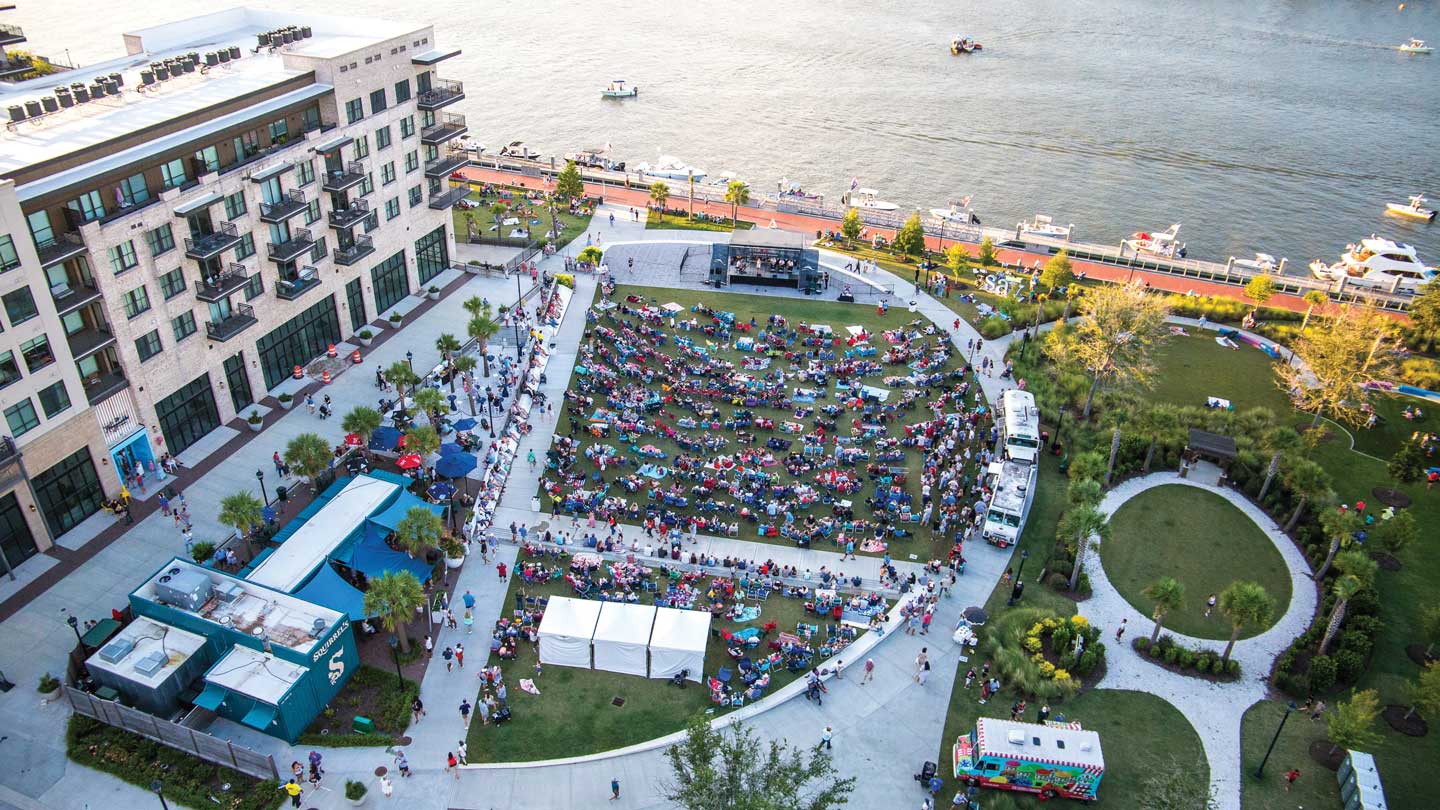
Public-private partnerships are key to developing lively modern waterfronts that offer more than scenic views.
Strategically aligned public-private partnerships are transforming the way cities approach waterfront development, turning public realm projects into financially self-sustaining assets. Take Chicago’s Riverwalk. Created with 90% public funding, the city leveraged partnerships with local vendors and operators to generate over $16 million in revenue between 2013 and 2018 — surpassing loan repayment goals by nearly 30%.
For commercial real estate, this example demonstrates a key principle: When public investment is paired with carefully designed private participation, dormant waterfronts can be turned into vibrant, revenue-generating destinations that also improve access and placemaking value. Cities across North America are exploring similar approaches, using collaborative alliances to align public goals with private incentives, diversify funding streams, and create dynamic spaces that attract foot traffic and continued investment. This approach offers valuable lessons for anyone seeking to maximize both the economic and social potential of waterfront developments.
The Economic Power of Waterfront Development
Waterfronts are among the strongest drivers of urban revitalization. By integrating the natural appeal of water and open views with programming, mixed-use development and recreational amenities, waterfront districts provide both tangible economic returns and intangible social benefits.
Once seen primarily as an industrial amenity, and later as an aesthetic enhancement for revitalizing postindustrial cities, waterfronts are now recognized as strategic economic assets capable of generating revenue, attracting investment, and creating long-term value for both community and commercial stakeholders. The most successful waterfront projects become central drivers of urban vitality, in part by integrating placemaking, activation and diverse revenue streams from the outset.
Activated waterfronts catalyze further development, encouraging private investment in adjacent parcels, spurring tourism and elevating property values. Cities can leverage these spaces to align public goals with private incentives, creating mutually reinforcing benefits.
Aligning Interests for Lasting Impact
Activated public spaces increase returns on investment in multifamily, office and retail properties. While the impact on retail sales is often the most immediate and visible — with improvements to the public realm driving foot traffic increases of up to 40% — research consistently shows that proximity to parks and public spaces also drives measurable gains elsewhere, including rental premiums of up to 20% for residential assets and 7% for offices with high-quality green amenities.
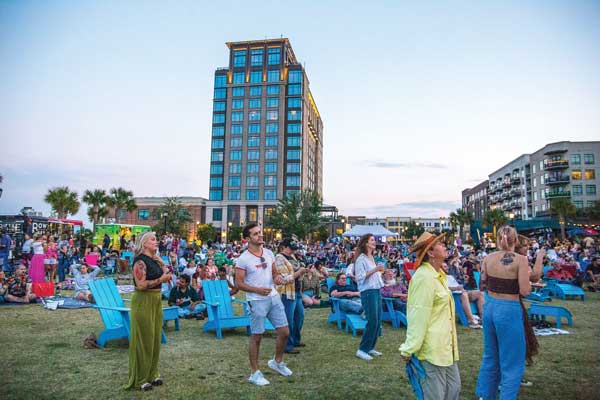
The Park at Eastern Wharf hosts a riverfront concert series and a variety of other events, helping to drive foot traffic to commercial tenants. Courtesy of Eastern Wharf
Developers of commercial and multifamily properties understand that vibrant neighborhoods increase the rents they can achieve and that great public spaces become amenities that attract and retain residents, workers and businesses. Local governments want this too, but they also place importance on making new or revitalized spaces and the associated programming accessible to everyone. This creates opportunities for property owners to activate public space in exchange for guarantees of public access to regular and special events. Many private property owners are willing to invest in public programming and events on public property adjacent to their buildings.
In practice, this alignment is often formalized through public-private partnerships that clearly define roles, responsibilities and long-term stewardship of shared spaces. Cities can streamline approvals, contribute funding or offer operational support, while property owners invest in activation that enhances the appeal of these spaces. When roles, funding responsibilities and performance expectations are established up front, public spaces are better positioned for sustained success and impact.
It is important to keep in mind that with the public sector as a client, certain procurement, permitting, labor and other rules must be followed.
Reimagining Older Waterfronts for Today’s Urban Experience
Although long prized as urban assets, many waterfronts require updating to become true everyday destinations. In Chattanooga, Tennessee, for example, real estate consulting, investment and development firm Agora Partners is working with the city’s economic development authority. With more private development and investment in and around Chattanooga’s downtown, the city’s waterfront parks need to be repositioned to better serve new residents, workers and tourists. While the parks must still accommodate the special events they were initially built to support, they also need to function as daily, integral parts of the downtown ecosystem.
This mirrors trends in other cities that developed waterfront and urban parks 25 years ago. Many are now shifting from spaces designed primarily for large-scale events to destinations focused on smaller, more frequent programming, amenities, and food and beverage offerings. These updates help extend visitor stays and make downtown a more attractive place to live and work.
People expect more than scenic views from modern waterfronts. They are looking for active programming, dining, seating, shade and connectivity to surrounding neighborhoods. Retrofitting these spaces to meet today’s expectations can significantly enhance both economic and social returns.
Activating Eastern Wharf
Eastern Wharf in Savannah, Georgia, offers an example of how these principles can be applied to new waterfront development. A carefully planned mix of public-private governance, market-driven programming and activation strategies has transformed the riverfront — once used as shipping infrastructure related to cotton and timber exports — into a multiuse destination.
Eastern Wharf blends residential, commercial and hospitality uses with a signature urban plaza and waterfront park, offering the largest public green space on the Savannah River. The project encompasses hundreds of apartments and townhomes, hotels, office buildings, and more than 30,000 square feet of retail space, all designed around a central public realm that serves as both a community gathering place and an economic driver. The first phases of development included the 200-key Thompson Savannah luxury boutique hotel, 300-plus apartments atop ground floor retail (Riverworks), townhomes and public spaces. Eastern Wharf currently includes 80,000 square feet of Class A office space, with additional phases planned to include more space.
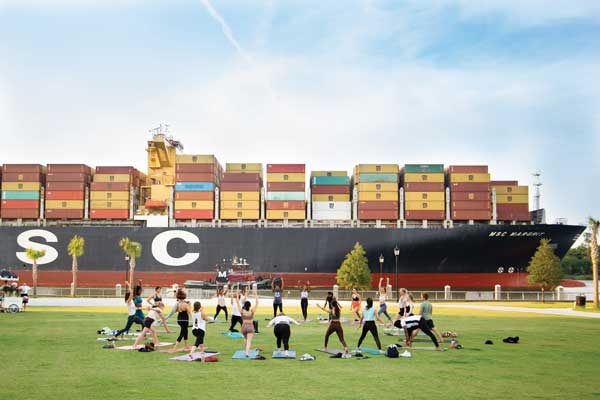
Eastern Wharf offers the largest public green space on the Savannah River. Courtesy of Eastern Wharf
Agora Partners worked alongside Regent Partners and Mariner Group to develop and implement programming and activation plans to bring the waterfront to life. The Park at Eastern Wharf hosts a riverfront concert series that focuses on regional independent music; biweekly farmers markets; cultural festivals with community-based partnerships; and food-centered events like the Eastern Wharf Food Truck Festival, each drawing thousands of people from across the region. Recognizing that parks and open spaces are most effective when they are consistently lively, the Eastern Wharf team created pop-up activations for future development parcels to maintain momentum, test new programming concepts and host larger-scale events, ensuring the area feels vibrant even before all buildings are complete. Programming and activation are managed through the Eastern Wharf Commercial District Association, with robust marketing, press and promotional support across social media channels topping 30,000 followers.
A key component of the project was the establishment of a public-private partnership with the city of Savannah, which Agora helped structure to govern and manage the new waterfront park. This framework clarified responsibilities, aligned public and private goals, and created a sustainable model for long-term maintenance and activation. Shared responsibilities for maintenance between private and public sectors allowed for both greater efficiency and better outcomes. Phase I involved approximately $200 million in private investment and $54 million in public investment, including $33 million in bonds for a public parking garage and $21 million for an extension of the Savannah Riverwalk, construction of parks and open spaces, and stabilization of the river bulkhead.
Agora also coordinated with the retail and hospitality teams within Eastern Wharf to integrate programming and activation with tenant offerings, events and dining experiences. This market-driven approach drives foot traffic to commercial tenants while enhancing the overall experience of the water-front, making it a destination for daily activity as well as special events.
Waterfronts as Engines of Growth
Thoughtful waterfront development can be a powerful driver of economic growth, enhancing a city’s cultural and recreational appeal and attracting residents, businesses and visitors. When designed with intentional programming, accessible public spaces and complementary private investment, waterfronts become magnets for activity and catalysts for broader urban revitalization. As cities evaluate how their waterfronts can better serve the community and visitors, public-private partnerships offer the most effective path to long-term success.
Ben Donsky is principal at Agora Partners. Howard Kozloff is principal and founder of Agora Partners.
What Is Entrepreneurial Planning?Public parks frequently face the challenge of balancing community access with the need to fund maintenance and operations. Entrepreneurial planning offers a solution by focusing on revenue generation through thoughtfully designed programming, events and amenities that encourage people to visit and linger. Rather than charging users directly for these services, parks can use the offerings to create indirect revenue opportunities through food and beverage sales and corporate or philanthropic sponsorships while keeping activities broadly accessible.
Steps to implement entrepreneurial planning
|