The 2026 Developer of the Year started out as a family-owned Minnesota lumberyard before growing into one of North America’s most respected real estate companies.
Minneapolis-based Ryan Companies has achieved something remarkably rare: It has survived and prospered for nearly nine decades through the Great Depression, recession, war, inflation, high interest rates, the Great Financial Crisis and the COVID-19 pandemic. Through it all, Ryan Companies has remained family-owned, committed to its culture and focused on the future. Today the company has 1,700-plus employees across the United States and generates more than $5.1 billion in annual revenue.
For the second time in two decades, Ryan Companies has been selected as the Commercial Real Estate Development Association’s Developer of the Year.
“Ryan Companies exemplifies the qualities this award is intended to recognize — innovation, leadership, vision and meaningful community impact,” said Marc Selvitelli, CAE, president and CEO of the Commercial Real Estate Development Association. “For decades, Ryan has helped shape the commercial real estate industry through transformative development, forward-thinking sustainability initiatives and an unwavering commitment to excellence. Its integrated approach, strong company culture and ability to create lasting value across markets make it an exemplary model for the industry and a truly deserving recipient of [the association’s] highest honor.”
Ryan Companies was previously named Developer of the Year in 2007.
“It’s a huge honor,” said Brian Murray, CEO of Ryan Companies. “We’ve been around for 88 years, and this recognition validates our long-term strategy and our ability to adapt and thrive through multiple economic cycles.”
Murray credits the Ryan team for the company’s success. “Virtually every one of our 1,700 team members touches development in one way or another. This recognition is a testament to those people and their commitment to our clients,” he said. “Awards like this are hard-earned, and receiving it again nearly 20 years later is something we’re honored by and grateful for.”
The Ryan Legacy
Ryan Companies got its start in 1938 as a small lumber and coal business in Hibbing, Minnesota. The Ryan lumberyard was launched by James Henry Ryan and his sons, Francis and Russell. The sons led the company until 1989.
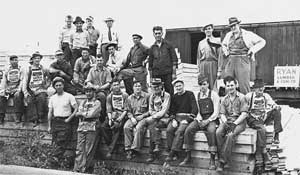
Ryan Companies' legacy of integrity and hard work dates back to its beginnings as a family-owned lumber and coal business in 1938. Courtesy of Ryan Companies U.S., Inc.
“The biggest thing that has remained the same since those early days is our focus on people,” said Molly Ryan Carson, president of Ryan’s Southwest Region and among the fourth generation of the family to work in the business. “My grandfather, great-uncle and father were always concerned about people — our customers and the people we work alongside every day. If we’re meeting their needs and building trusting relationships, that’s what matters.”
“Development involves math, projections and macroeconomics,” added Mike Ryan, the company’s national president and another fourth-generation family member, “but when you’ve worked alongside the people building a project, your perspective changes completely. You understand the impact this work has on families, on people’s purpose and on the pride they take in what they do. Molly’s dad [former Ryan CEO Jim Ryan] instilled a tremendous sense of humility in all of us.”
Carson said growth has never been the goal in and of itself. “Mike [her cousin], my brothers and I see our job as building upon what we’ve been blessed with. Not just keeping it the same, but making it better — for our employees, for our customers and for the communities we serve.”
Family Ownership, Professional Leadership
Ryan Companies combines family ownership with professional management. Unlike many family-owned businesses that limit leadership opportunities to family members only, Ryan intentionally cultivates leaders throughout the organization. Murray is a prime example.
“We have a nonfamily CEO, which sends an important message: There is no ceiling here,” Mike Ryan said. “Leadership opportunities exist throughout the company, and people can grow into them.”
Before joining Ryan Companies in 2009 — in the middle of the Great Financial Crisis — Murray spent 10 years with Arthur Andersen and another decade in senior financial leadership roles at UnitedHealth Group. Murray was introduced to Ryan by the president of Cristo Rey Jesuit High School Twin Cities, where Murray served as the first board chair. The school was built by Ryan, and the company’s owners raised funds for it in the community.
Culture: The Competitive Advantage
When asked to name Ryan’s greatest competitive advantage, its executives didn’t reference technology, capital or even development expertise.
“Our culture is the foundation of our business,” Murray asserted.
The company defines that culture through seven core values: safety, respect, integrity, stewardship, fun, excellence and family. These values are treated as operational principles that influence hiring decisions, leadership development, employee engagement and strategic planning.
Every employee who joins Ryan goes through a thorough interview process because the company wants to ensure they are aligned with those values and will help steward them going forward, Murray noted. As the company has expanded, maintaining that culture has become even more important.
“We invest heavily in leadership development, mentorship and communication,” Murray said. “We have programs for managers, senior leaders and executives. We have mentoring opportunities throughout the company.”
Planning for the Long Term
Ryan’s commitment to long-term planning is demonstrated through an intensive strategic planning process. Every five years, Ryan brings together team members from different disciplines, business units and geographic regions to discuss emerging trends, opportunities and challenges. The process, formalized following the Great Financial Crisis, has become one of the company’s defining management practices.
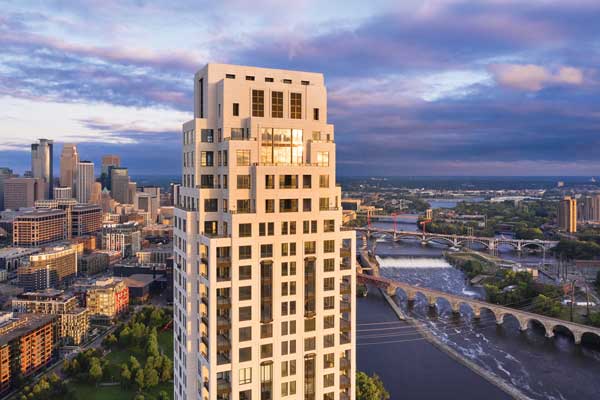
Rising 42 stories above the Twin Cities, Eleven is an iconic addition to the Minneapolis skyline and one of Ryan's most celebrated landmark developments. Corey Gaffer Photography
“The process creates alignment,” Murray said. “It gives our team members clarity about where we’re going and helps ensure we’re all moving toward the same goals.” One result has been Ryan’s commitment to diversification.
Ryan Companies provides development, architecture and engineering, construction, capital markets, property management and real estate services from its fully integrated platform that spans multiple regions and product types, including industrial, healthcare, mission critical (data centers), multifamily housing, senior living, office, retail and mixed-use development. The company has expanded geographically across the U.S. while developing sophisticated expertise in some of commercial real estate’s most complex property types.
“Diversification has been a major advantage for us,” Murray said. “That allows us to navigate downturns more effectively and take advantage of opportunities as they emerge.”
Adapting Through Change
Adaptability is a skill set every commercial real estate developer must acquire to survive. Ryan’s leaders believe adaptability begins with listening. “The other key is staying close to our clients,” Murray said. “During COVID, we spent a great deal of time talking with our best clients about the challenges they were facing and how we could help them navigate through that period.”
That approach has helped Ryan identify opportunities that might otherwise have been missed. Mike Ryan pointed to the company’s growth in data centers as an example. “We didn’t decide one day to become data center builders and developers. Our clients asked us to go there with them,” he said.
The company has repeatedly followed clients into new markets, new sectors and new opportunities. That approach “has served us well throughout our history,” Mike Ryan said.
Adaptability also means responding to challenges that sometimes have little to do with real estate. Earlier this year, for example, Ryan found itself preparing employees and jobsites for potential U.S. Immigration and Customs Enforcement (ICE) activity in Minneapolis.
The issue required a thoughtful and measured response. “The Twin Cities has been through a lot over the last several years,” Murray said. “One of our core values is safety, [which] includes both physical and mental well-being.”
Ryan Companies developed protocols, training programs and legal resources to help employees understand their rights and responsibilities. “Our role wasn’t to take sides,” Murray said. “It was to provide resources, support our employees and make sure we stayed true to our values.”
Throughout its history, Ryan has demonstrated an ability to adapt to changing conditions without abandoning its principles. That combination of flexibility and consistency may be one of the company’s greatest strengths.
Impact in Action
For Ryan Companies, development has never been about just creating buildings. The phrase the company uses to describe its philosophy — “Ryan Impact” — captures a broader view of what commercial real estate can accomplish.
“It’s multilayered,” Carson said. “We’re builders, but the impact of buildings is much broader than construction. It’s about strengthening communities, helping customers succeed, developing our people, giving back, creating great places and being responsible environmental stewards. It’s taking a holistic view of our impact.”
One of the six pillars of “impact” Ryan focuses on is building worth. For Mike Ryan, the concept comes down to people. “Last year, we estimate our work supported roughly 30,000 families,” he said. “When you think about rent, groceries, education and everything else those jobs make possible, that’s meaningful. Building worth means remembering that what we’re doing is bigger than any individual project.”
That philosophy can be seen throughout Ryan’s portfolio, but perhaps nowhere more clearly than in three developments that demonstrate the company’s ability to combine business success with community impact.
Highland Bridge: Reimagining a Community
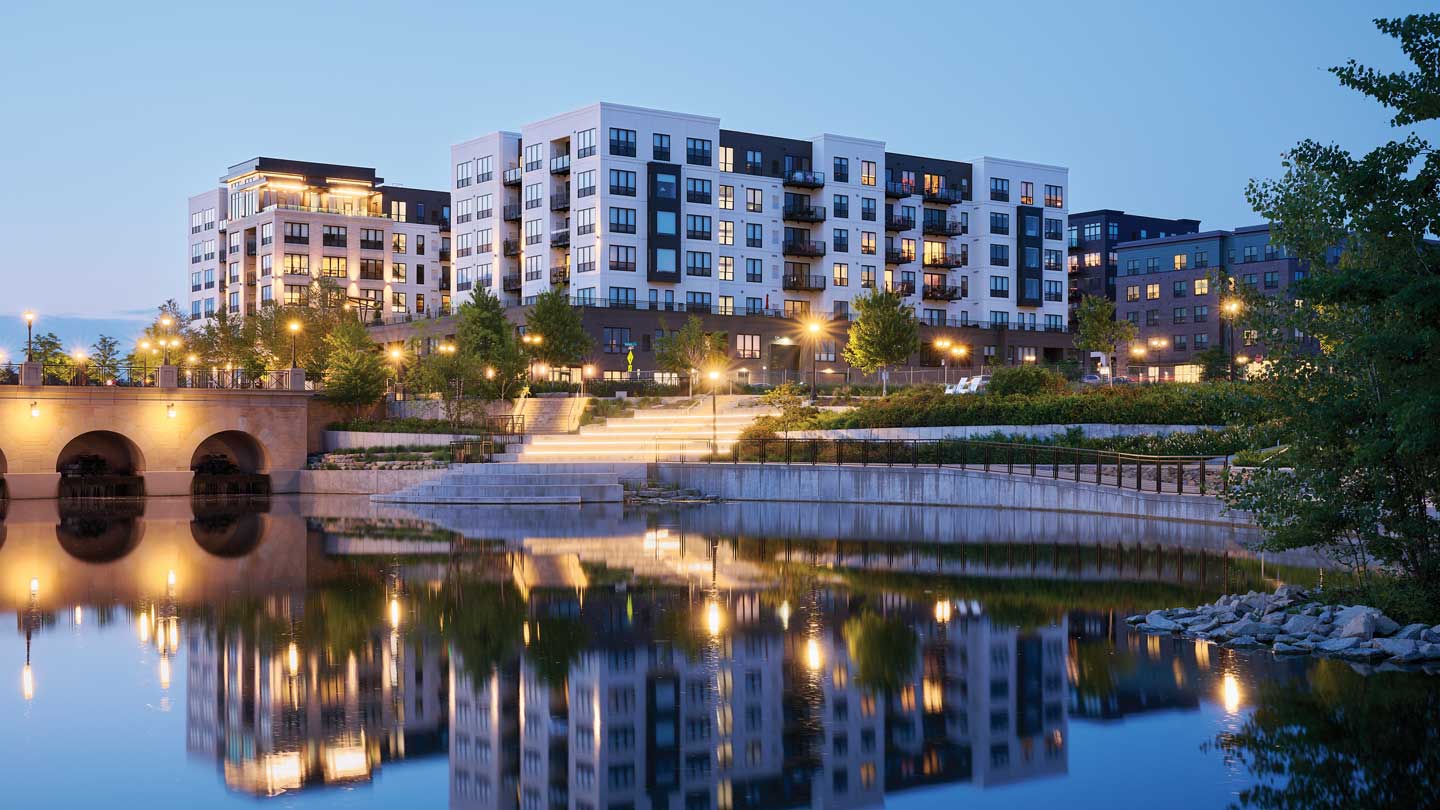
Of all the projects completed by Ryan Companies in recent years, Highland Bridge may best represent the company’s vision of what development can accomplish. Located on the former site of Ford Motor Company’s Highland Park assembly plant in St. Paul, Minnesota, Highland Bridge is today a thriving mixed-use community.
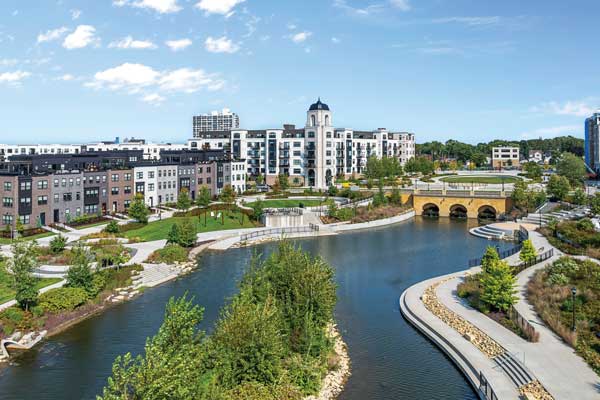
One of the hallmarks of Highland Bridge is its innovative stormwater infrastructure, including a central water feature that serves as a public recreational space. Drone Brothers LLC
For nearly a century, Ford served as an economic anchor for the neighborhood. At its peak, the plant employed more than 2,000 workers. When it closed in 2011, it left behind not only a massive vacant property but also uncertainty about the surrounding community’s future.
Ryan Companies recognized an opportunity. After securing development rights to the site, the company embarked on one of the most ambitious redevelopment projects in the region’s history. “It’s in our backyard, so that made it personal,” Mike Ryan said. “The site carried enormous history. Ford helped build that neighborhood, and when the plant closed … we had the opportunity to help create a new future for it.”
The resulting development encompasses housing, healthcare, retail, office, senior living and public spaces. Approximately 3,100 residences are planned, with 20% designated as affordable housing.
The development also reconnects the neighborhood to the Mississippi River while creating a network of plazas, trails and community gathering spaces. More than 55 acres have been dedicated to open space, including parks, athletic fields and civic areas.
Stormwater infrastructure at Highland Bridge includes a combination of engineered and natural systems and is the heart of the 122-acre development. Stormwater is collected in a central water feature that serves as the spine of a vibrant public recreational space. Area water quality has been improved, as 94% of total suspended solids and 75% of phosphorus is captured. Combined with almost 3 acres of biofiltration, the overall system helps regulate the steady, predictable flow of clean water into Hidden Falls Regional Park and the Mississippi River.
Oracle Campus: Building a Technology Hub
If Highland Bridge showcases Ryan’s community-building capabilities, Oracle’s campus in Austin, Texas, highlights Ryan’s ability to execute complex, high-profile corporate developments. Completed in 2018, the 560,000-square-foot waterfront campus has become one of Austin’s most recognizable corporate facilities.
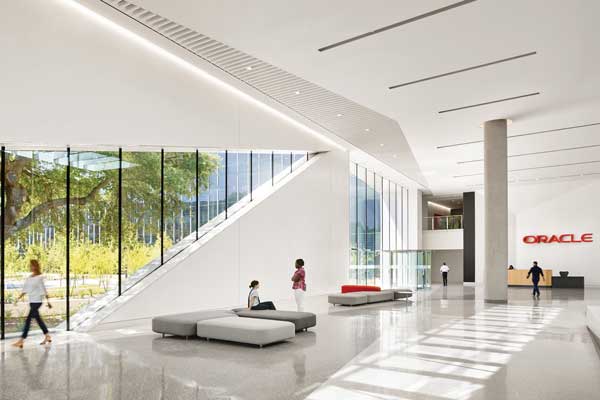
Ryan served as both developer and builder of Oracle's 560,000-square-foot headquarters campus in Austin, Texas. Casey Dunn Photography
The project represented far more than a traditional office development. For Oracle, the campus was intended to support a rapidly growing workforce while creating an environment that would attract and retain top talent. For Austin, it would reinforce the city’s emergence as a premier U.S. technology center. The development took on increased significance when Oracle relocated its corporate headquarters from Silicon Valley to Austin in 2020.
Ryan served as both developer and builder, integrating multiple disciplines throughout planning and construction. “It was an extremely high-profile project that required extraordinary coordination and communication,” Carson said.
One challenge stemmed from the pace at which Oracle operates. “Oracle moves at incredible speed,” she said. “Construction doesn’t always move at that pace. The challenge was staying nimble while remaining grounded in the fundamentals of development and construction.”
The campus was designed to foster creativity, collaboration and employee well-being. Large floor plates, abundant natural light and ample connections to outdoor spaces create an environment that feels distinctly different from traditional office buildings.
Amenities include wellness facilities, fitness centers, cafes, and outdoor gathering spaces overlooking the water. “You can’t be flexible without having a solid foundation,” Carson said. “That project reinforced the importance of communication, discipline and teamwork.”
Pullman Crossings: Development as Economic Opportunity
On Chicago’s South Side, Pullman Crossings tells a different story. Rather than serving as a mixed-use neighborhood or corporate headquarters, Pullman Crossings illustrates how industrial development can become a catalyst for economic revitalization. Developed in partnership with Chicago Neighborhood Initiatives, the project transformed a 62-acre vacant site into a modern industrial park designed to attract major employers and create jobs in a historically underserved area. The development was among the first major projects in the region to utilize the federal opportunity zone program.
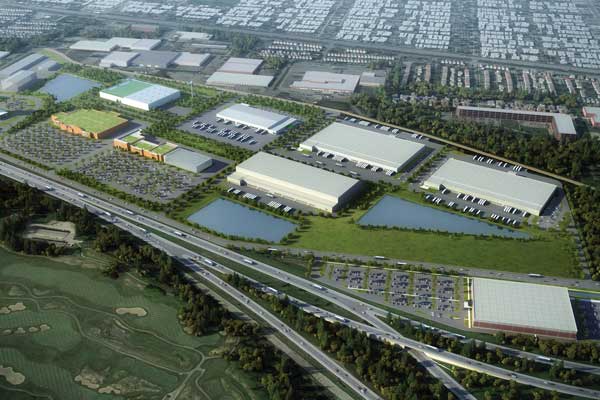
Pullman Crossings transformed a vacant site on Chicago's South Side into a modern industrial park and catalyst for economic revitalization. Ryan Companies US, Inc.
Today, companies such as Whole Foods, Amazon and SC Johnson operate within the development, bringing new investment and employment opportunities to the neighborhood.
For Mike Ryan, the project’s importance is measured less by square footage than by opportunity, such as the approximately 600 jobs it has created. “It’s fundamentally a jobs story,” he said. “The goodwill generated in the community has been extraordinary.”
He also points to the impact on Ryan’s own employees. “It became a tremendous learning opportunity. Projects like Pullman create pride, challenge people professionally and give them a chance to work on something genuinely impactful.”
Innovation
Commercial real estate has not historically been known for rapid innovation, Murray pointed out. “But we’re seeing that change today in the industry. [Ryan] is making significant investments in artificial intelligence, computational design and data-driven decision-making tools. Those technologies are already helping our architects, engineers, developers and construction professionals evaluate alternatives more quickly, improve forecasting and make better-informed decisions.”
Ryan doesn’t view technology as a replacement for people. Rather, it regards technology as a tool that allows people to spend more time doing what they do best. “Our industry already faces workforce shortages,” Murray said. “AI helps augment the expertise of our people by reducing repetitive work and allowing them to focus on higher-value activities like client relationships, strategic thinking and problem-solving.”
Leading the Sustainability Conversation
Few issues are reshaping commercial real estate more profoundly than sustainability. For Ryan Companies, sustainability has become a core business strategy. In 2022, the company committed to achieving net-zero Scope 1, 2 and 3 greenhouse gas emissions by 2040 — fully 10 years ahead of the timeline established under the Paris Agreement. The commitment was ambitious by any measure.
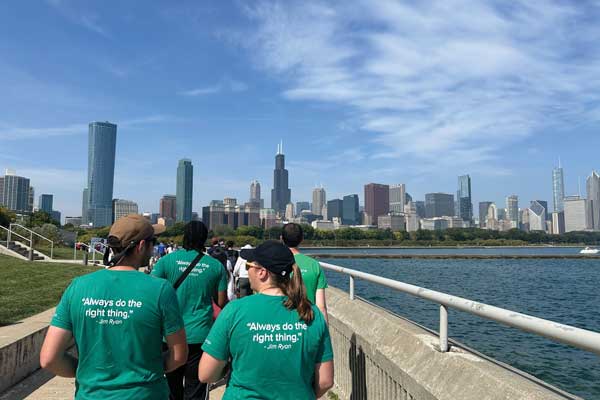
Ryan team members put the company's core value of stewardship into motion across the country. Ryan Companies US, Inc.
“We believe we have a responsibility to our clients, our employees and future generations,” Murray said. “We also see sustainability as a competitive advantage.”
That dual perspective — doing the right thing while creating business value — has become central to Ryan’s approach. “I think the discussion [in the industry around sustainability] is shifting from cost to value,” Murray said.
Building owners increasingly recognize that energy-efficient buildings can reduce operating costs, attract tenants, improve resilience and strengthen long-term asset values. Ryan’s sustainability initiatives now extend across virtually every aspect of the company.
The firm has delivered highly efficient multifamily developments powered by renewable energy, completed innovative life sciences facilities designed around aggressive environmental performance standards, and renovated office buildings to achieve net-zero operations.
One project Ryan points to with pride is VAYA on Axia, a multifamily development in Chula Vista, California, that uses an 816-kilowatt solar array to power all 278 residential units through a virtual net metering platform. By serving as the on-site energy provider, the property delivers clean electricity to residents at rates below the local utility, reducing utility costs and improving long-term energy resilience. The system is projected to generate $95 per unit per month in net operating income, creating a strong recurring revenue stream for ownership. This approach enhances asset value while lowering tenant expenses, demonstrating a replicable model for financially resilient, sustainability-driven multifamily development.
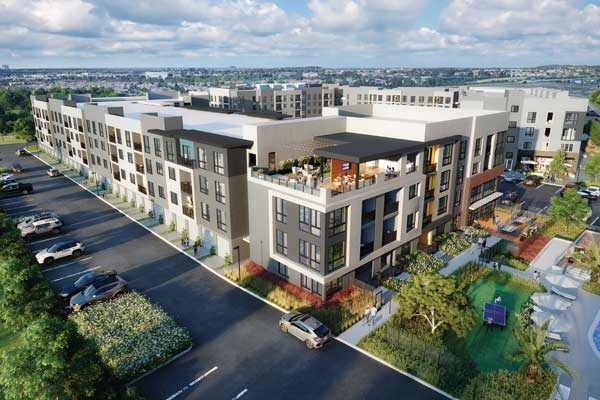
VAYA on Axia, which uses a solar array to power 278 residential units in Chula Vista, California, is representative of Ryan's commitment to sustainable development. Ryan Companies US, Inc.
Beyond its own portfolio, Ryan has worked to advance sustainability practices throughout the industry. The company played a leadership role in developing the AGC Playbook on Decarbonization and Carbon Reporting in the Construction Industry, a resource from the Associated General Contractors of America to help measure and reduce project-related emissions.
Ryan also helped create From Vulnerability to Value, a climate resilience framework that provides practical guidance for developers, investors and owners seeking to address climate-related risks.
Another initiative brought Ryan together with organizations including The Nature Conservancy, AWS, Google and Bath & Body Works to improve watershed health throughout central Ohio.
For Mike Ryan, these efforts reflect a simple reality: “Many of our employees care passionately about sustainability, and many of our clients expect leadership in that area. We’re builders. We know development impacts the environment. That creates an obligation to be proactive and responsible.”
Giving Back
Ryan’s commitment to stewardship extends beyond its projects. Community involvement has been woven into the company’s identity for generations. Each year, Ryan contributes 5% of pretax earnings to charitable and community initiatives. In 2025 alone, those contributions totaled approximately $7.7 million and supported more than 600 unique charities.

Ryan team members regularly volunteer to support local organizations, demonstrating hands-on commitment to the communities where they live and work. Courtesy of Ryan Companies U.S., Inc.
The company’s philanthropic efforts focus primarily on wellness, shelter and education. Employees receive paid volunteer time and regularly contribute thousands of hours of service to organizations throughout the communities where Ryan operates. “Stewardship is one of our core values, and philanthropy is an extension of that,” Murray emphasized.
The annual RyanGivesBack campaign has become one of the company’s signature initiatives. In 2025, employees and company leaders helped raise nearly $1 million for charitable causes. Yet Ryan’s leaders emphasize that philanthropy should go beyond writing checks. Its architects, engineers, construction managers and development team members frequently donate professional expertise to nonprofit organizations that otherwise might not have access to those services. “It’s about more than donations,” Murray said. “It’s about making communities healthier, stronger and more vibrant.”
Looking Ahead
As Ryan Companies approaches its 90th anniversary, its leaders are optimistic about the future of both the company and the industry. Murray sees significant opportunities in manufacturing, logistics, housing, sustainability and technology. At the same time, challenges remain. Geopolitical uncertainty, economic volatility, workforce development and rapidly changing technologies will require companies to remain agile and adaptable.
If Ryan’s founders could see the company today, its scale would likely amaze them. Mike Ryan believes, however, that what the founders would still ask about are the people the company impacts: “Are employees fulfilled? Do they feel part of something bigger than a job? Are we making communities better?”
He related a story that helps illuminate why those questions remain central to Ryan Companies nearly nine decades after its founding: “I had the opportunity to walk through our offices with my Great-Uncle Fran on his 73rd work anniversary. He was 97 years old. … He stopped at desk after desk asking about people’s spouses, children and even their dogs. He didn’t know every detail about everyone, but he knew something about everyone. That left a huge impression on me.”
That “people first” philosophy continues to guide Ryan Companies and helps explain why it was named 2026 Developer of the Year.
Ron Derven is a contributing editor to Development magazine.