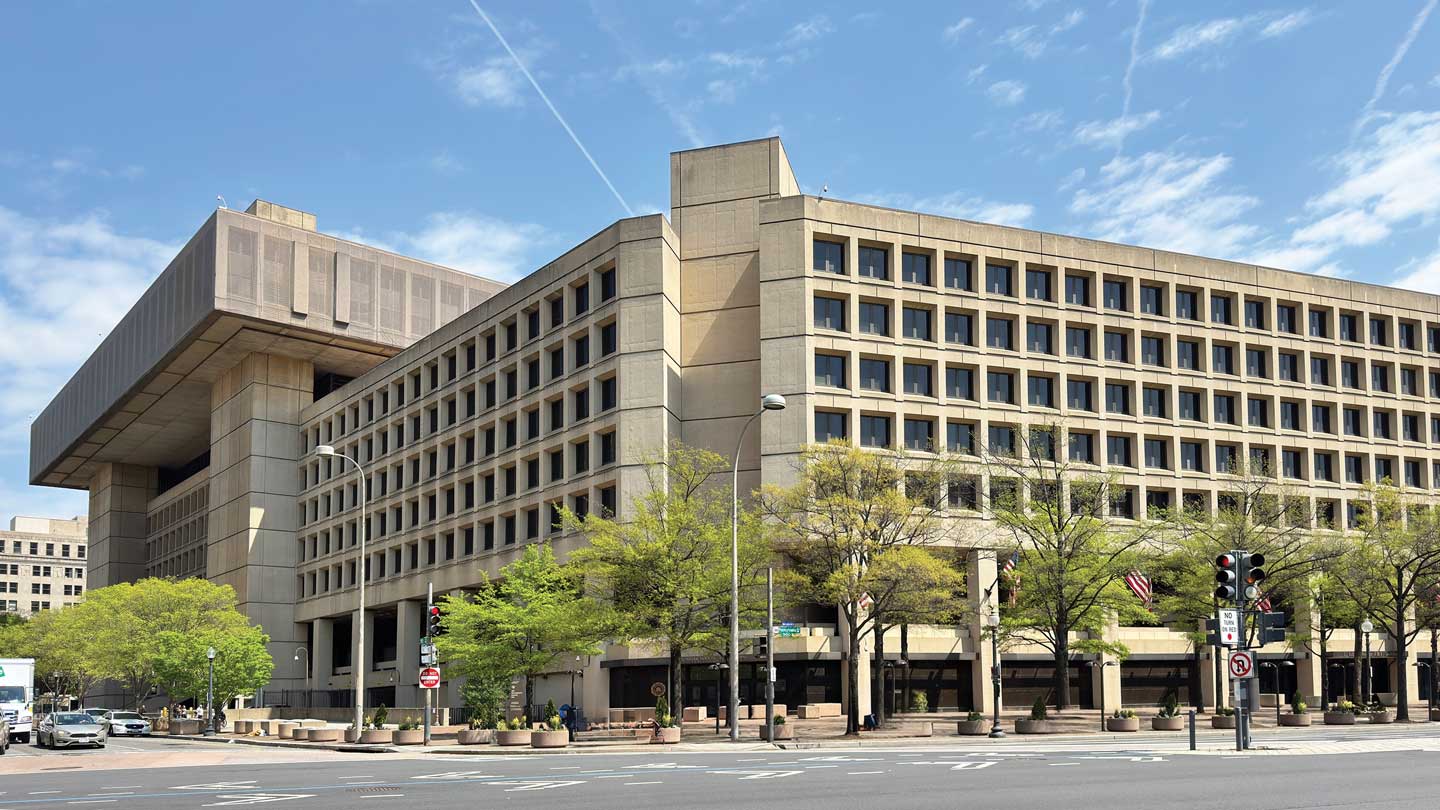
Underused space and rising costs are driving the push to sell federal buildings.
Over more than a century of land acquisition, wartime expansion, and postwar investment in infrastructure, the U.S. government’s real estate portfolio has become massive.
Today, the General Services Administration (GSA) federal portfolio encompasses more than 354 million square feet of owned and leased space in 9,600 buildings spread over more than 2,200 communities across the United States. Much of this is office space, with more than 170 million gross square feet of office listed in the public dataset. Taxpayers will shoulder approximately $5 billion in 2026 to maintain all of GSA’s portfolio, which is only a slice of the entire federal real estate portfolio. The agency also spends another $5 billion to lease space in metropolitan areas nationwide.
Therein lies the problem: $10 billion is an extremely high price for office space that repeated studies have shown is largely underused or, in some cases, completely vacant thanks to changing federal needs.
The cost doesn’t stop there. Multiple reports, including the Public Buildings Reform Board’s (PBRB) recent interim report, The Cost of Inaction: Deferred Maintenance in GSA’s Portfolio, indicate that because so much of the federal inventory is old and in disrepair, deferred maintenance and repair liabilities now exceed $50 billion — more than double GSA’s highest previous estimate.
The Need to Reduce the Federal Real Estate Footprint
The bottom line is obvious: Congress is never going to appropriate $50 billion to address the immediate needs of these assets. For decades, GSA, the federal government’s primary nonmilitary landlord, has been receiving annual maintenance and repair appropriations equaling about 0.375% of its portfolio’s functional replacement value (FRV). That contrasts sharply with industry standards, which recommend an FRV rate of 2% to 4%. The result is a federal portfolio dominated by deferred maintenance backlogs that increase building life cycle costs, accelerate asset deterioration and degrade facility performance.
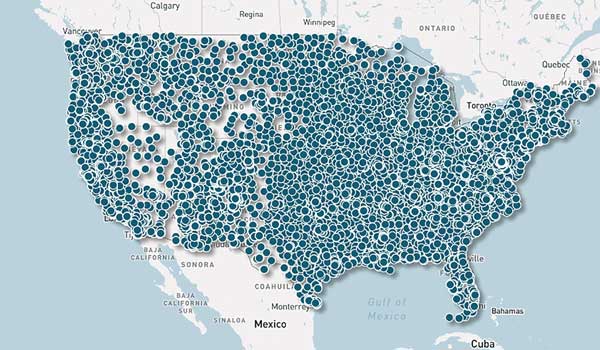
Map drawn from public data showing density of federally owned buildings in the continental United States. Credit: Public Buildings Reform Board
This mounting backlog of deferred maintenance and repair costs is crippling the ability of numerous federal agencies to deliver on their missions while also endangering the health, safety and welfare of the federal workers who occupy these buildings. Deteriorating or abandoned federal buildings are also potentially dragging down struggling downtowns, eroding nearby property values and stifling economic recovery in numerous metropolitan areas.
To address both current liabilities and long-term stewardship, the federal government would appear to have little choice but to strategically and aggressively reduce its real estate footprint through targeted consolidation and divestiture of its underutilized properties. Due to current market conditions, the timing to do that has never been better.
Reducing the federal portfolio holds the potential to yield rare, triple bottom line benefits — saving U.S. taxpayers billions of dollars in day-to-day operations and maintenance costs; allowing federal employees to work in safer, modernized workspaces; and returning underused properties to the local tax base to be repurposed to meet pressing community needs.
The bipartisan PBRB, created to recommend disposition of federal properties when Congress passed the Federal Assets Sale and Transfer Act of 2016 (FASTA), has already submitted three rounds of recommendations for disposing of federal properties. Following through on the recommendations could save the government an estimated $5.675 billion over 30 years.
A Window of Opportunity for Federal Property Sales
The latest of these recommendations, issued in May 2025, identified 11 federal properties encompassing nearly 7.1 million gross square feet of office space in seven U.S. cities and Washington, D.C., for disposition. PBRB estimates that leaving these sites would result in year-one operating expense savings of more than $52 million. The same set of recommendations listed another 50 federal properties to be considered for future disposition.
At the same time, the Trump administration has announced plans to sell headquarters buildings in Washington for the Agriculture Department, the Energy Department, and the Department of Housing and Urban Development. In addition, the FBI is moving out of its headquarters and relocating to the Ronald Reagan Building and International Trade Center, which already provides office space for several other agencies.
GSA’s recent actions to engage private sector brokerage expertise to dispose of PBRB-recommended high-value properties have been well received by real estate investors and host jurisdictions.
Administration officials have justified selling these buildings because of long-deferred maintenance projects and because most of the buildings have not met the occupancy benchmarks signed into law in 2025 as part of the Utilizing Space Efficiently and Improving Technologies (USE IT) Act. The legislation requires federal agencies to show that their buildings meet a utilization rate of at least 60% or, failing to do so, develop plans to relocate.
While all parties involved seem to agree that the disposition of federal properties and the consolidation of impacted agencies into existing buildings is needed, the process to dispose of a federal building is rife with time-consuming and expensive provisions. FASTA, the same law that created PBRB, provided a solution to the normal process by allowing the GSA administrator to run a negotiated and noncompetitive sale. This kind of transaction would speed up the sale and produce incentives for the market to look at some of the federal portfolio.
How Private Redevelopment Can Revitalize Communities
The benefit of a transition from federal to private ownership cannot be understated. Municipalities benefit from the generation of tax revenues on privately owned properties, whereas federal properties pay no taxes to local municipalities.
Developers interested in adaptive reuse or acquisition of a former federal property must also be aware of potential risks, however. Federal agencies typically have transferred properties in as-is condition. This could mean that some of the buildings in question may have historic covenants or additional entitlements. As a result, appropriately underwriting the reuse and repurposing of some locations will take due diligence on the part of the buyer. GSA potentially mitigates such uncertainty by providing information about potential zoning designations, historic preservation requirements and environmental remediation.
The catch in all this is that it takes money for the federal government to move agencies from underutilized federal office buildings, modernize workspaces, and sell those unused or underused properties. Some office markets nationally are soft, meaning federal properties in those areas may be difficult to sell at a price that maximizes the property’s value, development potential and economic benefit to the taxpayer. In such instances, it is essential to develop an approach to divestments that meets both the realities of market absorption and the need for investors to know that a submarket is about to change hands to enable private sector redevelopment to make such investments worthwhile.
The power of the private market to ease this problem lies in federal access to currently depressed lease rates, access to swaps and transfers of properties with developers, and coordination with local municipalities on the timing and particulars of federal sales. In some instances, a public-private partnership to redevelop the federal property may be optimal. Still others may be in such a state of disrepair that a complete teardown to create open public space may be the best option.
If the private sector can be convinced there is a profit to be made in repurposing underused federal buildings, it could resolve the glut of expensive, poorly maintained federal office space, simultaneously breathing new life into long-neglected facilities and the neighborhoods in which they reside.
Private sector development could also mean a huge win for financially challenged local governments. By working with private developers, local governments could transform underused buildings into spaces that directly meet the needs of the communities in which they are located, whether that is open space, a mixed-use facility or affordable housing. It also means these revitalized properties could become a new source of taxable income for municipalities nationwide.
Talmage Hocker is acting chair of the Public Buildings Reform Board, an independent, bipartisan agency established under the Federal Assets Sale and Transfer Act of 2016 to identify and recommend opportunities for reducing and consolidating the federal real property inventory.