Experience-driven concepts show the potential to turn hard-to-fill spaces into neighborhood anchors.
Commercial real estate has often been thought to follow people: where they live, work, shop and gather. Neighborhoods that successfully blend those uses tend to be the most vibrant and resilient. Experiential retail has emerged as a critical element in making these mixed-use districts more enduring.
Experiential retail can take many forms, including immersive entertainment venues, interactive dining concepts and engaging cultural attractions. And this sector is growing — the global experiential retail market was valued at approximately $132 billion in 2025, according to Metatech Insights, and is projected to reach $543 billion by 2035. This trend is particularly popular with younger consumers. Recent McKinsey consumer research indicates that Gen Z is 1.5 times more likely than the general population and four times more likely than older generations to visit an immersive experience.
Destination-oriented concepts provide benefits to surrounding businesses, ultimately creating a more robust commercial district. Restaurants gain additional pre- and post-event customers, hotels have another amenity to market, and retailers see an increase in foot traffic. Additionally, these uses give residents and workers more reasons to stay in the neighborhood after the workday ends.
Case Study: Chicago’s River North
Chicago has long embraced experiential retail. This includes destinations like Starbucks Reserve Roastery, a 35,000-square-foot cathedral of coffee that is the largest Starbucks location in the world, and the Harry Potter Shop Chicago, home to the largest Butterbeer Bar in the United States. Recently announced concepts include The Cube, a 25,000-square-foot attraction based on the TV game show; the world’s largest Hello Kitty Cafe; and the Candy Hall of Fame Experience, a 60,000-square-foot concept spanning three floors and backed by a 20-year lease.
The River North neighborhood has emerged as a hub for experiential retail concepts. Chicago’s first restaurant destination district also boasts a dense residential population, a large workforce, vibrant nightlife, boutique hotels, strong transit access and proximity to both the Chicago River and Lake Michigan. Combined with adjacency to the Magnificent Mile, these attributes make River North a true seven-day-a-week, around-the-clock destination.
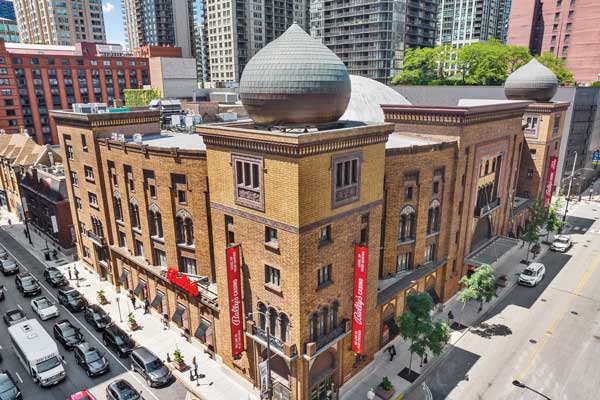
Originally built for the Shriners in 1912, Medinah Temple has more recently been serving as the temporary home of Chicago’s first casino. Courtesy of Friedman Properties
The opening and announcement of several large-scale experiential concepts in River North reflect growing confidence in the neighborhood. Collectively representing tens of millions of dollars in private investment, these projects highlight the district’s appeal as one of Chicago’s most vibrant commercial and entertainment destinations.
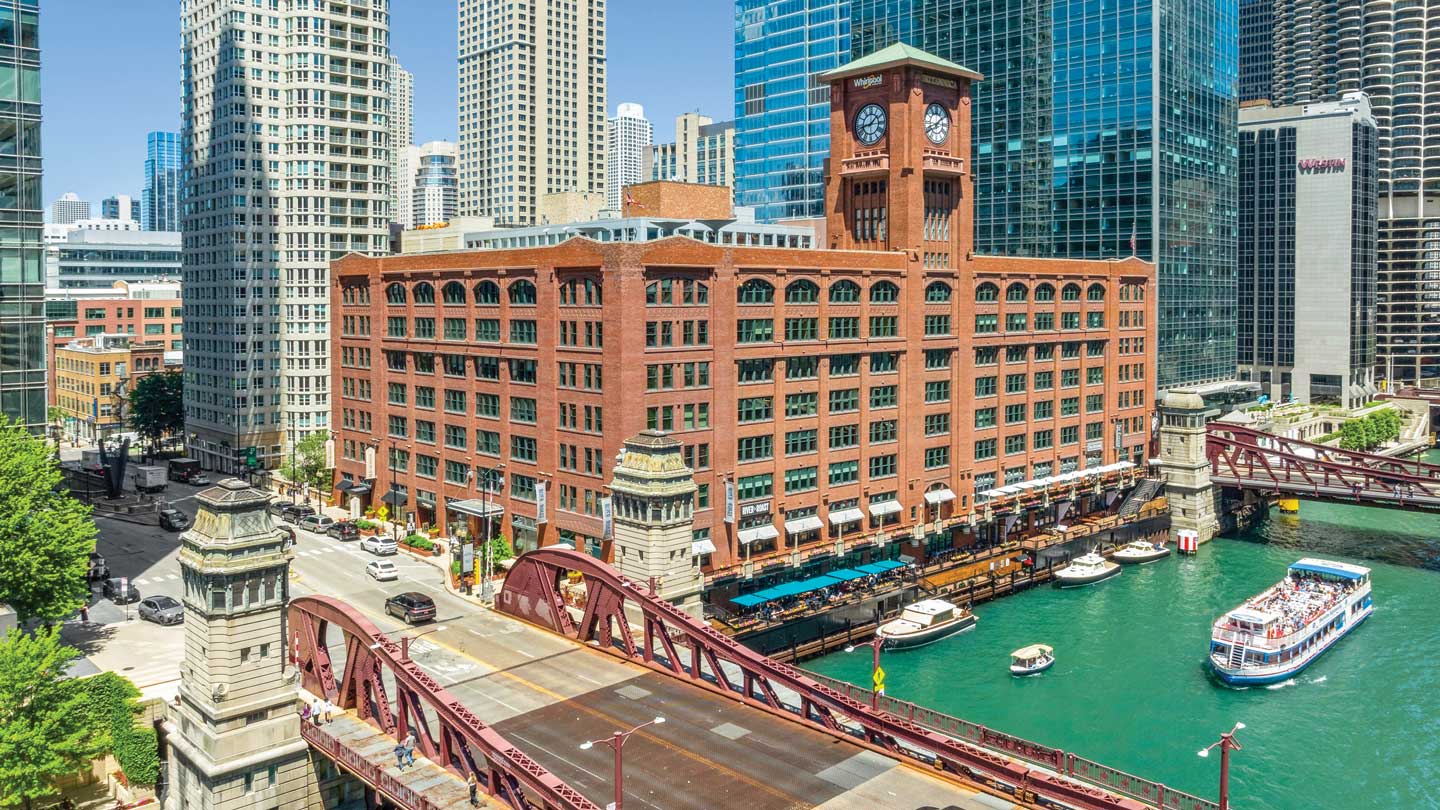
Theater of the Mind, co-created by musician David Byrne and investor Mala Gaonkar and presented by Goodman Theatre, occupies a 15,000-square-foot installation in the historic Reid Murdoch Building overlooking the Chicago River. Blending neuroscience with storytelling, Theater of the Mind takes audiences on an immersive experience of self-exploration and discovery, shaped by the creators’ life experiences as well as research into how the brain perceives the surrounding environment. The temporary installation saw strong ticket sales, with 20,000 tickets sold in the first two months of operation, leading to an extended run of performances.
The installation is part of a collective $15 million investment in and around the landmark Reid Murdoch office building, which functions as a prominent arrival point for people entering River North from the Loop. These improvements include replacement of the property’s riverwalk as well as new and refurbished dining concepts that, together, demonstrate the value of combining experiential, office and restaurant-driven uses to foster a dynamic neighborhood.
Another concept, F1 Arcade, scheduled to open in mid-August in a former restaurant space, illustrates the rise of hospitality-led competitive socializing. The concept combines Formula 1 racing simulators with food, cocktails, group events and watch parties. The branded social venue is designed to convert fandom, competition and hospitality into a repeatable real estate format. In River North, it also backfills a highly visible vacant corner and adds another evening-oriented draw to an already-active district.
A $50 million renovation has reimagined the historic McCormick Mansion into The Hand & The Eye, a five-story destination that blends magic performances with dining. The 36,000-square-foot venue features 37 performance rooms, hidden spaces, secret passageways and intimate stages designed to ensure every visit unfolds differently.
Legacy buildings with difficult layouts or specialized histories may be liabilities for ordinary tenants, but they can become assets for experience-driven users. This is true of both the former McCormick Mansion and the nearby Medinah Temple, originally built as a meeting place and auditorium for the Shriners in 1912.
Friedman Properties owns and operates more than 50 mixed-use properties encompassing over 5 million square feet in Chicago. It brought Bally’s Chicago — the city’s first casino — to the Moorish Revival Medinah Temple building in 2023 following the departure of the nation’s original Bloomingdale’s Home Store. With the temporary casino scheduled to depart in 2027, when the permanent facility opens in River West, plans are underway to reposition the landmark building for a new occupant, with a focus on attracting a global brand seeking a highly visible U.S. flagship. The vision is to create a destination that extends beyond traditional retail and resonates with both local and international customers.
Experiential Retail as Growth Driver
The current role of experiential retail is most relevant for property owners confronting vacancies in spaces that do not fit the old leasing playbook. Historic buildings, big-box storefronts, former theaters and other unconventional spaces can be difficult to lease to conventional tenants. Experiential users, however, often need the high ceilings, dramatic entrances, architectural authenticity, back-of-house capacity and other features essential to crafting a differentiated and memorable customer experience.
At the neighborhood level, experiential concepts solve several problems at once. They reduce vacancy, generate foot traffic, support adjacent businesses, diversify commercial corridors and provide new reasons for locals to keep coming back. This is most apparent at scale; a single experiential venue is a curiosity, but a cluster helps to create a destination.
River North’s reputation alone attracts the next wave of operators, generating a self-reinforcing cycle that benefits every business in the neighborhood. This strategy can be deployed in other markets if the right starting conditions are in place. Strong experiential districts need mixed-use density, flexible buildings, transit access, supportive food and beverage offerings, and a clear identity. They also need owners willing to experiment with experience and capable of identifying concepts that will create value for both the asset and the neighborhood.
Cities have spent decades searching for what makes people want to show up, revisit and convince others to do the same. Experiential tenants can be a valuable strategy for mixed-use districts looking to reinvent themselves as they navigate today’s shifting retail landscape.
Warren Strovel is executive vice president of operations at Friedman Properties.