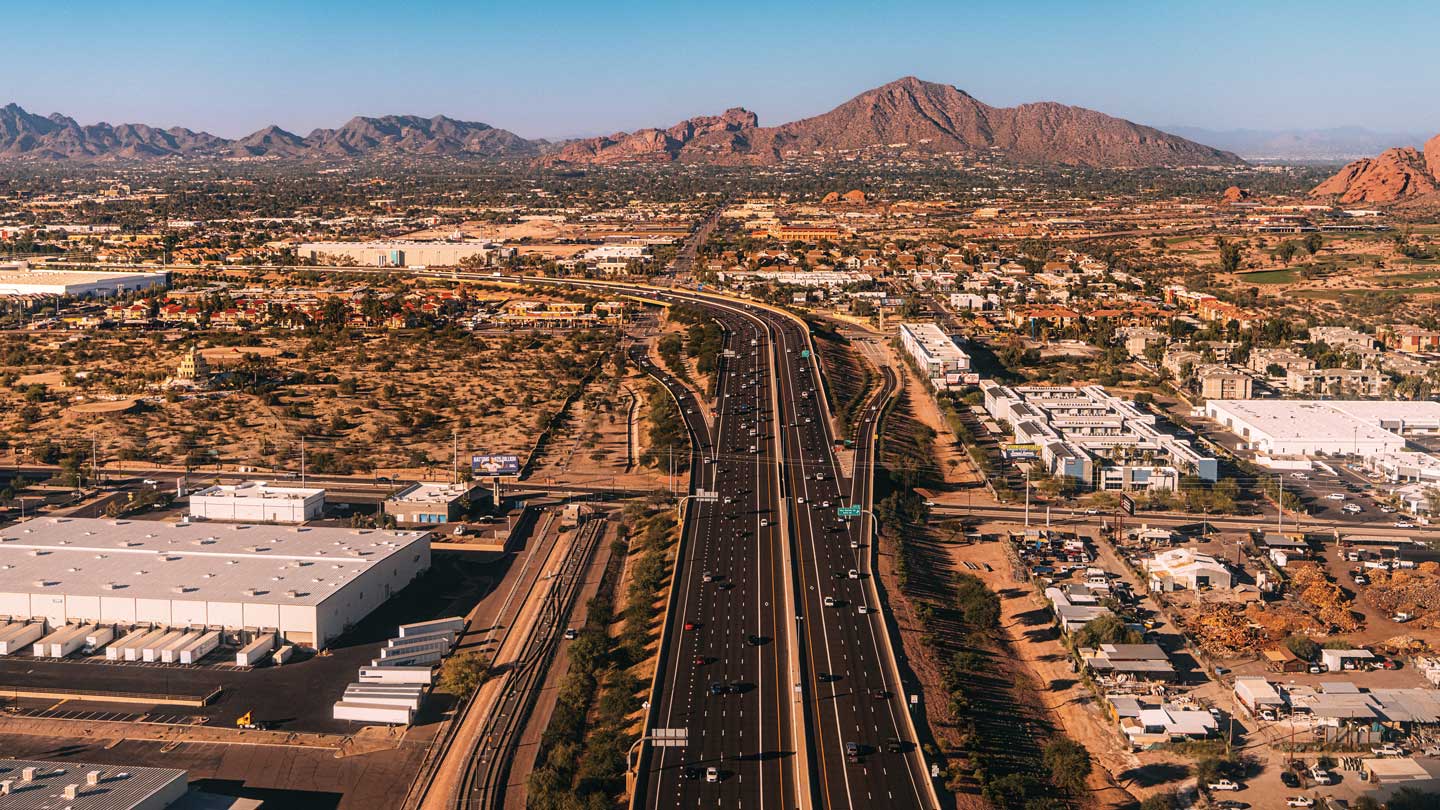
Inland logistics hubs are becoming a key part of resilient distribution networks.
For decades, coastal gateway markets such as Los Angeles, Long Beach and Oakland served as the backbone of U.S. logistics and global trade. These locations provided unmatched access to ports, population centers and transportation infrastructure. For most industrial users, there was simply no better option.
That calculus is changing.
Rising costs, supply constraints, chronic congestion and growing regulatory complexity are prompting a meaningful shift in how companies think about their distribution networks. What was once a straightforward decision to locate near a major port has become a more nuanced exercise in balancing cost, speed, resilience and operational flexibility. The result is a structural realignment reshaping the industrial real estate landscape across the United States.
The Case Against Coastal Concentration
The challenges facing coastal gateway markets are not temporary. They are structural.
Labor costs in major California logistics markets have risen significantly over the past decade, driven by a combination of minimum wage increases, union agreements and intensifying competition for workers. While industrial rents have moderated from their post-pandemic highs over the past couple of years, total occupancy costs in many coastal gateway markets remain well above equivalent spaces in secondary markets, continuing to place pressure on users.
Congestion adds another layer of cost that is harder to quantify but equally real across many of the nation’s coastal gateway markets. Port delays, chassis shortages and drayage bottlenecks have extended lead times and introduced variability that makes it difficult for companies to meet customer expectations. The supply chain disruptions of 2020 through 2022 accelerated awareness of these vulnerabilities and permanently changed how logistics executives think about risk.
Regulatory complexity rounds out the picture across many coastal markets. Environmental regulations, zoning restrictions and lengthy entitlement processes have made new development slower, more expensive and less predictable than in many inland markets. For companies that need to move quickly, this creates real competitive disadvantages.
The Rise of Multinode Distribution Networks
The response from industrial users has not been to abandon coastal markets entirely. Ports still matter. Population density still matters. But the model of concentrating distribution capacity in a small number of coastal facilities is giving way to something more sophisticated.
Companies are building multinode networks that incorporate both coastal access and inland distribution centers. This approach allows goods to move quickly off ships and inland, reducing dwell time and congestion risk while maintaining proximity to major consumer markets. It also builds redundancy into supply chains, a priority that has moved from a theoretical best practice to an operational necessity following the disruptions of recent years.
According to JLL, net absorption in secondary industrial markets outpaced primary gateway markets for three consecutive years, from 2021 to 2023, as this shift accelerated. Markets across the Sun Belt, Mountain West and Midwest have absorbed significant new demand as a result.
What Industrial Users Are Prioritizing
Appreciating why secondary markets are gaining traction requires understanding what industrial users are prioritizing in site selection decisions today.
Cost efficiency remains the starting point. Lower occupancy costs, more competitive labor markets and reduced drayage expenses can meaningfully improve unit economics for logistics operations. In an environment where margin pressure is persistent, these savings matter.
Transportation connectivity is equally important. Proximity to major interstate corridors, intermodal rail facilities and regional airports allows companies to maintain service levels without the cost premiums associated with gateway locations. Markets with multiple transportation options provide the flexibility that modern supply chains require.
Land availability and development flexibility matter more than they did a decade ago. The growth of e-commerce has driven demand for larger, more sophisticated facilities with higher clear heights, advanced automation and specialized storage capabilities. Increasingly, access to reliable electrical power has become a critical consideration, particularly as warehouse automation, cold storage, advanced manufacturing and data-intensive operations require greater energy capacity. Coastal markets constrained by limited land supply often cannot accommodate these requirements at scale. Secondary markets with available land, sufficient utility infrastructure and streamlined regulatory environments can.
Business climate and workforce availability complete the picture. States with competitive tax structures and pro-business policies have attracted both companies and workers, creating self-reinforcing growth dynamics that support long-term industrial demand.
Secondary Markets Gaining Momentum
Several U.S. markets have emerged as beneficiaries of this structural shift. Each offers a distinct combination of location, cost and infrastructure advantages that appeal to different segments of industrial demand.
The Phoenix metropolitan area has become one of the most active industrial markets in the country, driven by population growth, a business-friendly regulatory environment, and strong connectivity to both California markets and Texas. According to Colliers, Greater Phoenix recorded more than 18 million square feet of net absorption in 2025, highlighting the market’s continued strength despite a broader normalization in industrial demand.
Indianapolis and Columbus, Ohio, have long been recognized as logistics crossroads, with access to a significant portion of the U.S. population within a day’s drive. Their central locations, affordable land and established transportation infrastructure have made them preferred locations for large-scale distribution operations.
Savannah, Georgia, has emerged as one of the fastest-growing port markets in the U.S., offering an alternative to Gulf Coast and West Coast gateways because of its strong rail connectivity and available development land in surrounding submarkets.
The Inland Empire east of Los Angeles remains one of the largest industrial markets in the country, serving as a critical buffer between the ports of Los Angeles and Long Beach and broader distribution networks. Despite increased market availability in recent years, it continues to attract demand from users seeking proximity to port operations without the constraints of port-adjacent locations.
Each of these markets reflects the same underlying dynamic: Industrial users are diversifying their footprints.
Reno: A Case Study in Strategic Market Entry
For private real estate investment firm Westmount Realty Capital, the decision to enter the Reno, Nevada, market in 2025 reflected both this broader strategic shift and a disciplined evaluation of market fundamentals.
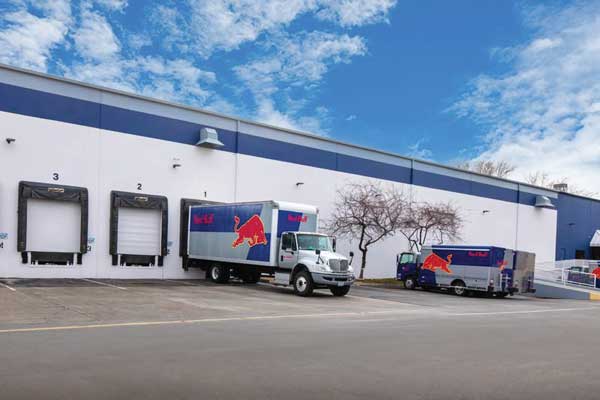
The Lillard industrial portfolio, three Class A assets totaling more than 800,000 square feet and leased to multiple third-party logistics providers, drew Westmount Realty Capital's interest to opportunities in the Reno market. Courtesy of Westmount Realty Capital
Reno’s appeal begins with geography. Situated within a one-day truck drive of major West Coast population centers, including Los Angeles, the San Francisco Bay area and Seattle, the market allows industrial users to maintain proximity to coastal demand without the costs and constraints of port-adjacent locations. Reno actually lies farther west than the city of Los Angeles, a geographic fact that surprises many people but underscores the market’s strategic position for Western distribution.
Transportation infrastructure reinforces this advantage. The intersection of Interstate 80 and the Union Pacific rail line provides connectivity to key markets across the Western United States, giving tenants flexibility in both inbound and outbound logistics.
Nevada’s business climate adds another layer of appeal. The state’s tax structure and regulatory environment have attracted a wide range of companies, from logistics providers to advanced manufacturing firms, and supported faster project approvals and more predictable development timelines than many coastal jurisdictions.
What drew Westmount’s attention specifically was the Lillard industrial portfolio, three Class A assets totaling more than 800,000 square feet in Sparks, Nevada. The properties were leased to a roster of international and regional third-party logistics providers and offered the kind of institutional quality construction, transportation connectivity and value-add potential that aligns with Westmount’s investment strategy.
The decision to move into Reno was not about chasing a trend. It was about identifying a market where structural demand drivers, geographic fundamentals and asset-level characteristics converged in a way that supported long-term value creation.
The Future of Industrial Real Estate
Westmount believes the shift away from exclusive reliance on coastal gateways is not a temporary phenomenon. It reflects fundamental changes in how supply chains are designed, how e-commerce is reshaping distribution requirements, and how companies are thinking about resilience and cost efficiency.
Coastal markets will continue to play essential roles. Ports are not going anywhere. But the future of industrial real estate is increasingly defined by multimarket networks that combine coastal access with inland efficiency. Companies that build those networks thoughtfully will gain competitive advantages. Investors and developers that understand how those networks are evolving will find opportunities that others miss.
Cliff Booth is the founder and chairman at Westmount Realty Capital.