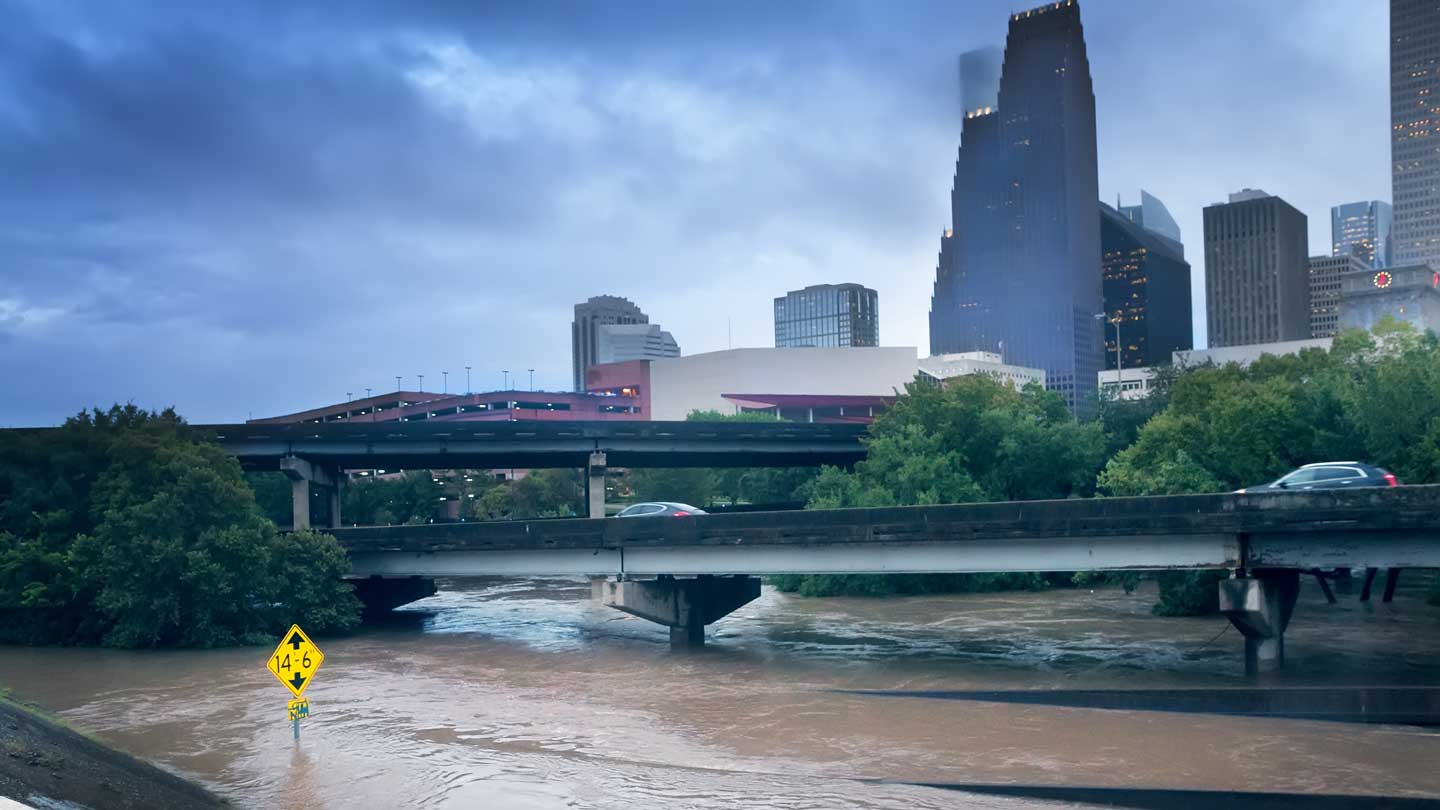
Rising insurance costs and climate hazards are bringing physical risk into sharper focus.
Commercial real estate owners and developers have long managed weather-related risks, but physical climate hazards are becoming a more prominent factor in investment, development and operating decision-making. Rising insurance costs, increased scrutiny from lenders and investors, and a growing number of severe weather events are nudging markets participants to take a closer look at how flood, wildfire, wind and heat exposure can affect asset performance and long-term value. As these risks become more visible in underwriting, site selection and capital planning, the commercial real estate industry is taking steps toward adapting its approach to risk assessment and resilience.
To help industry professionals understand these evolving challenges, the CREDA Research Foundation recently published Managing Physical Risk in Commercial Real Estate. Authored by Spenser Robinson, DBA, of Central Michigan University and Siqi Zheng, Ph.D., of the Massachusetts Institute of Technology, the report examines how developers, investors, owners and corporate occupiers currently assess, manage and mitigate physical climate risks. Drawing on interviews with more than 50 industry professionals, the research provides practical guidance for navigating a market in which physical risk is becoming more material to real estate decision-making.
The report identifies insurance markets as one of the clearest ways that physical risk is affecting commercial real estate. Rising premiums, higher deductibles and increasing coverage limitations are directly influencing development feasibility, operating costs and investment decisions, particularly in markets exposed to flood, wind, wildfire and severe storm hazards.
Respondents across the industry noted that insurance estimates often provide an early indication of elevated risk, allowing developers and owners to evaluate potential challenges before moving forward with a project. In some cases, insurance costs have become significant enough to influence site selection decisions, reshape development plans or discourage investment in certain locations.
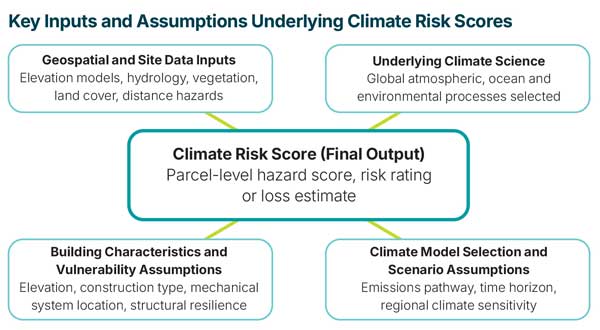
The report also highlights several factors (see figure) that influence whether mitigation measures are ultimately adopted. Many resilience strategies, such as elevating building pads, strengthening stormwater systems, relocating critical equipment and incorporating redundant power, require significant up-front capital investment. At the same time, the benefits are often realized through avoided losses rather than increased rents or higher asset values. As a result, developers frequently evaluate resilience investments through the lens of cost, holding period and project economics.
Overall, the findings suggest that physical risk is becoming more prominent in development and investment decisions. Developers are most likely to make substantial investments in mitigation when required by tenants, lenders, institutional investors or evolving building codes. Growing investor and lender scrutiny, rising insurance costs and changing regulatory requirements point toward increased adoption of resilience strategies as physical risk becomes more integrated into real estate decision-making.
The report provides timely insights for developers, owners, investors and occupiers seeking to navigate this evolving landscape. As the commercial real estate market continues to adapt, understanding how physical risk is assessed and mitigated will become an increasingly important component of real estate strategy.
Access the report at credaresearch.foundation.
Max Shpilband is a research analyst for the CREDA Research Foundation.